
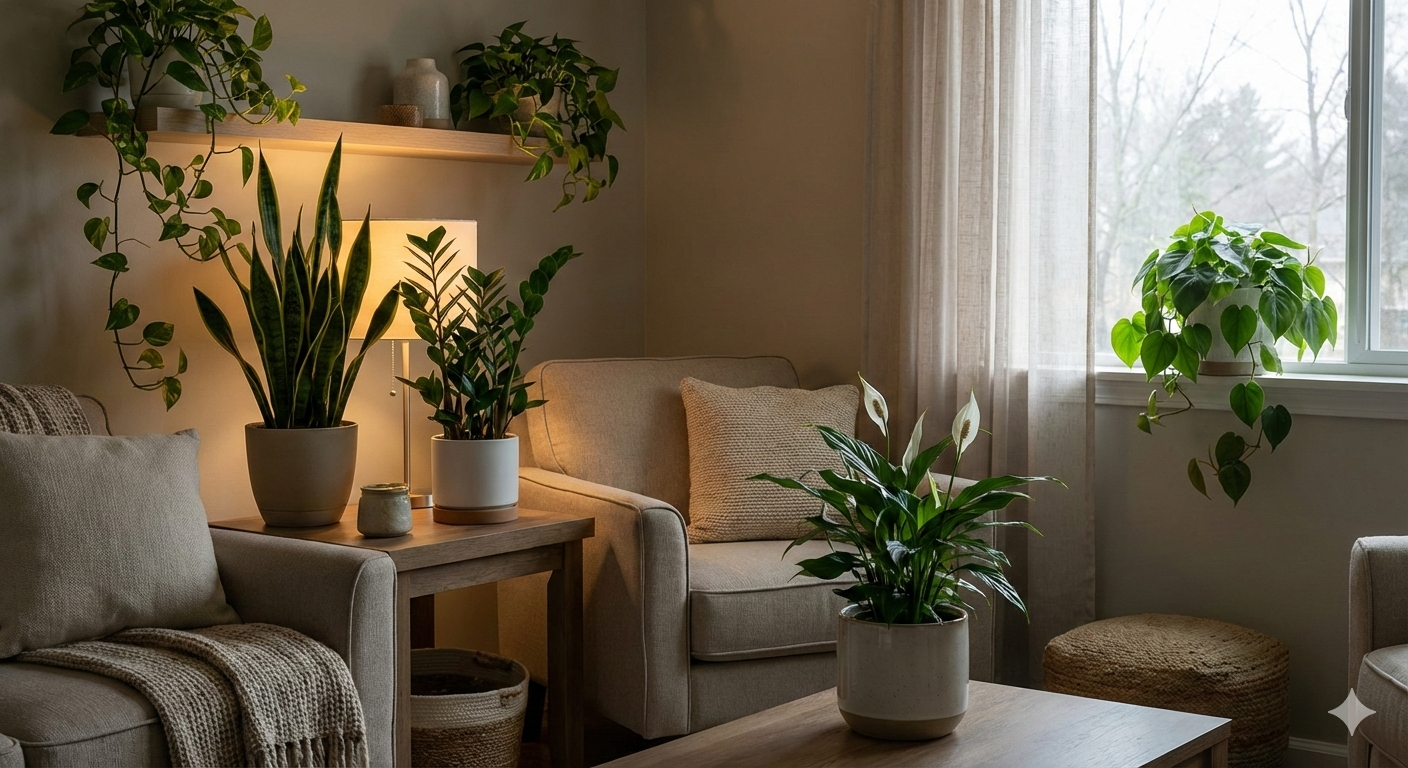
Low-Light Indoor Plants That Are Easy to Maintain: Ultimate Beginner’s Guide
Low-light spaces don’t have to be dull or empty. Even corners with little sunlight can host a thriving indoor garden. By choosing low-light indoor plants that are easy to maintain, you can create a green sanctuary that enhances your home, improves air quality, and boosts mood—all without overwhelming maintenance.
In this guide, we cover over 20 low-light plant types, care techniques, propagation, troubleshooting, and styling tips. Whether you’re a beginner or someone with a busy lifestyle, this guide is your complete roadmap to successful indoor gardening.
Why Low-Light Plants Are Perfect for Beginners
For beginners, indoor gardening can feel intimidating. Some plants require sunlight, precise watering, and constant care. Low-light plants solve these issues:
-
Minimal sunlight required: Thrive even in rooms without direct sunlight.
-
Easy watering routines: Survive occasional neglect without dying.
-
Air purification: Many remove toxins like formaldehyde and benzene from indoor air.
-
Visual appeal: Lush leaves bring life to desks, shelves, and dim corners.
Starting with low-light plants is a confidence-building step for anyone new to gardening.
Choosing the Right Low-Light Plant
Even within low-light species, conditions vary. Consider these factors before selecting a plant:
-
Light tolerance: Check if the plant prefers dim shade or moderate indirect light.
-
Watering needs: Some plants tolerate drought; others need consistently moist soil.
-
Growth habit: Trailing, upright, or bushy growth affects space planning.
-
Resilience: Beginner-friendly plants resist pests, temperature swings, and neglect.
Top Low-Light Indoor Plants That Are Easy to Maintain
Here is a detailed list of plants for dim spaces, with care tips for beginners:
1. Snake Plant (Sansevieria trifasciata)
-
Light: Low to bright indirect
-
Water: Water when soil is dry
-
Care tip: Avoid overwatering; can tolerate dry spells
-
Why it’s easy: Nearly indestructible, air-purifying, and upright design fits any room
2. ZZ Plant (Zamioculcas zamiifolia)
-
Light: Low to moderate indirect
-
Water: Every 2–3 weeks; let soil dry
-
Care tip: Avoid cold drafts; dust leaves for better photosynthesis
-
Why it’s easy: Glossy leaves, drought-tolerant, survives neglect
3. Pothos (Epipremnum aureum)
-
Light: Low to bright indirect
-
Water: Top 1 inch soil dry before watering
-
Care tip: Trim yellow leaves; propagate from cuttings
-
Why it’s easy: Fast-growing, trailing plant perfect for shelves or hanging baskets
4. Peace Lily (Spathiphyllum)
-
Light: Low to moderate indirect
-
Water: Keep soil slightly moist; leaves droop when thirsty
-
Care tip: Remove dead flowers to encourage blooms
-
Why it’s easy: Elegant blooms and low-maintenance care
5. Heartleaf Philodendron (Philodendron hederaceum)
-
Light: Low to moderate indirect
-
Water: Let top 1–2 inches dry between watering
-
Care tip: Supports trellis or hanging planters for aesthetic appeal
-
Why it’s easy: Tolerant of low light, forgiving if watering schedule is inconsistent
6. Cast Iron Plant (Aspidistra elatior)
-
Light: Low to moderate indirect
-
Water: Water occasionally; can survive drought
-
Care tip: Trim dead leaves; slow grower
-
Why it’s easy: Nearly indestructible, perfect for shaded hallways or offices
7. Chinese Evergreen (Aglaonema)
-
Light: Low to moderate indirect
-
Water: Allow soil to dry slightly between watering
-
Care tip: Rotate plant for even growth; avoid direct sun
-
Why it’s easy: Colorful leaves, highly resilient
8. Dracaena (Dracaena marginata)
-
Light: Low to bright indirect
-
Water: Water moderately; avoid soggy soil
-
Care tip: Remove yellow tips; slow grower adds elegance
-
Why it’s easy: Upright growth, decorative, minimal maintenance
9. Spider Plant (Chlorophytum comosum)
-
Light: Moderate indirect; tolerates low light
-
Water: Keep soil slightly moist
-
Care tip: Propagate babies to expand collection
-
Why it’s easy: Adaptable, produces “pups,” air-purifying
10. Parlor Palm (Chamaedorea elegans)
-
Light: Low to moderate indirect
-
Water: Allow top inch to dry
-
Care tip: Slow grower; avoid drafts
-
Why it’s easy: Brings tropical feel to dim rooms
11. Rubber Plant (Ficus elastica)
-
Light: Low to moderate indirect
-
Water: Let soil dry; tolerate brief drought
-
Care tip: Wipe leaves to remove dust
-
Why it’s easy: Sturdy, low-maintenance, visually striking
12. Calathea (Prayer Plant)
-
Light: Low to moderate indirect
-
Water: Keep soil moist
-
Care tip: Mist occasionally; avoid overwatering
-
Why it’s easy: Unique leaf patterns, interesting night movement
13. Bromeliads
-
Light: Low to moderate indirect
-
Water: Water the central cup; soil stays slightly dry
-
Care tip: Remove dead leaves; ensure humidity
-
Why it’s easy: Vibrant blooms, low-maintenance, tropical appearance
14. Maidenhair Fern (Adiantum)
-
Light: Low indirect
-
Water: Keep soil consistently moist
-
Care tip: Avoid direct sun and dry air
-
Why it’s easy: Elegant fronds, thrives in bathrooms or high-humidity rooms
15. Maiden Cane Palm (Chamaedorea seifrizii)
-
Light: Low to moderate indirect
-
Water: Moderate; let top soil dry between watering
-
Care tip: Slow-growing, trim older leaves
-
Why it’s easy: Hardy palm with tropical look, perfect for corners
16. Aluminum Plant (Pilea cadierei)
-
Light: Low to moderate indirect
-
Water: Keep soil slightly moist
-
Care tip: Rotate to prevent uneven growth
-
Why it’s easy: Decorative silver leaves, low-maintenance
17. Maiden Bamboo Palm (Chamaedorea metallica)
-
Light: Low to moderate indirect
-
Water: Water when top inch of soil dries
-
Care tip: Remove yellowing fronds; prefers humid areas
-
Why it’s easy: Hardy, decorative, slow-growing
Seasonal Care Tips
Even low-light plants benefit from seasonal adjustments:
-
Spring/Summer: Encourage growth with moderate fertilization and occasional pruning.
-
Fall: Reduce watering as growth slows.
-
Winter: Avoid overwatering; provide indirect light and stable temperatures.
Troubleshooting Common Problems
Problem: Yellow leaves
-
Likely overwatering; check soil and adjust schedule
Problem: Drooping leaves
-
Either under or overwatering; adjust water frequency
Problem: Slow growth
-
Could be too little light; rotate plant closer to indirect light
Problem: Brown leaf tips
-
Low humidity; mist leaves occasionally or use a pebble tray
Decorating with Low-Light Plants
-
Clustered displays: Group multiple plants for visual impact and improved humidity.
-
Shelves and corners: Use trailing plants like pothos or philodendrons for shelves.
-
Office desk: Small plants like ZZ plants or spider plants improve aesthetics and productivity.
-
Bathroom oasis: Ferns and peace lilies thrive in high-humidity areas.
Benefits of Low-Light Indoor Plants
-
Air purification: Removes toxins, improves indoor air quality
-
Mood booster: Indoor greenery reduces stress
-
Increased productivity: Studies show plants improve focus in workspaces
-
Aesthetic value: Enhances any room without needing sunlight
Propagation Made Simple
-
Stem cuttings: Pothos, philodendron, and ZZ plants grow easily in water or soil.
-
Division: Snake plants, ferns, and spider plants can be split at roots.
-
Offsets/pups: Spider plants, bromeliads, and peace lilies produce babies for replanting.
Propagation is a beginner-friendly way to expand your collection and maintain plant health.
Low-Light Indoor Plant Care Checklist
| Task | Frequency | Notes |
|---|---|---|
| Watering | Every 2–3 weeks | Check soil first |
| Fertilizing | Every 2–3 months | Spring and summer only |
| Dusting leaves | Monthly | Prevents pests |
| Pruning | As needed | Maintain aesthetics |
| Rotation | Every 2–4 weeks | Ensures even growth |
Conclusion
Low-light indoor plants that are easy to maintain are perfect for beginners, busy homeowners, or anyone with shaded spaces. From snake plants, ZZ plants, and pothos to calatheas, bromeliads, and ferns, there’s a plant for every corner of your home or office.
With proper watering, occasional fertilization, pest management, and thoughtful placement, even beginners can enjoy a thriving indoor garden. These plants enhance air quality, boost mood, and add beauty to every dimly lit space.
Start small, choose resilient species, and gradually expand your collection. Your indoor garden doesn’t need sunlight to flourish—it only needs the right plants, care, and attention.