
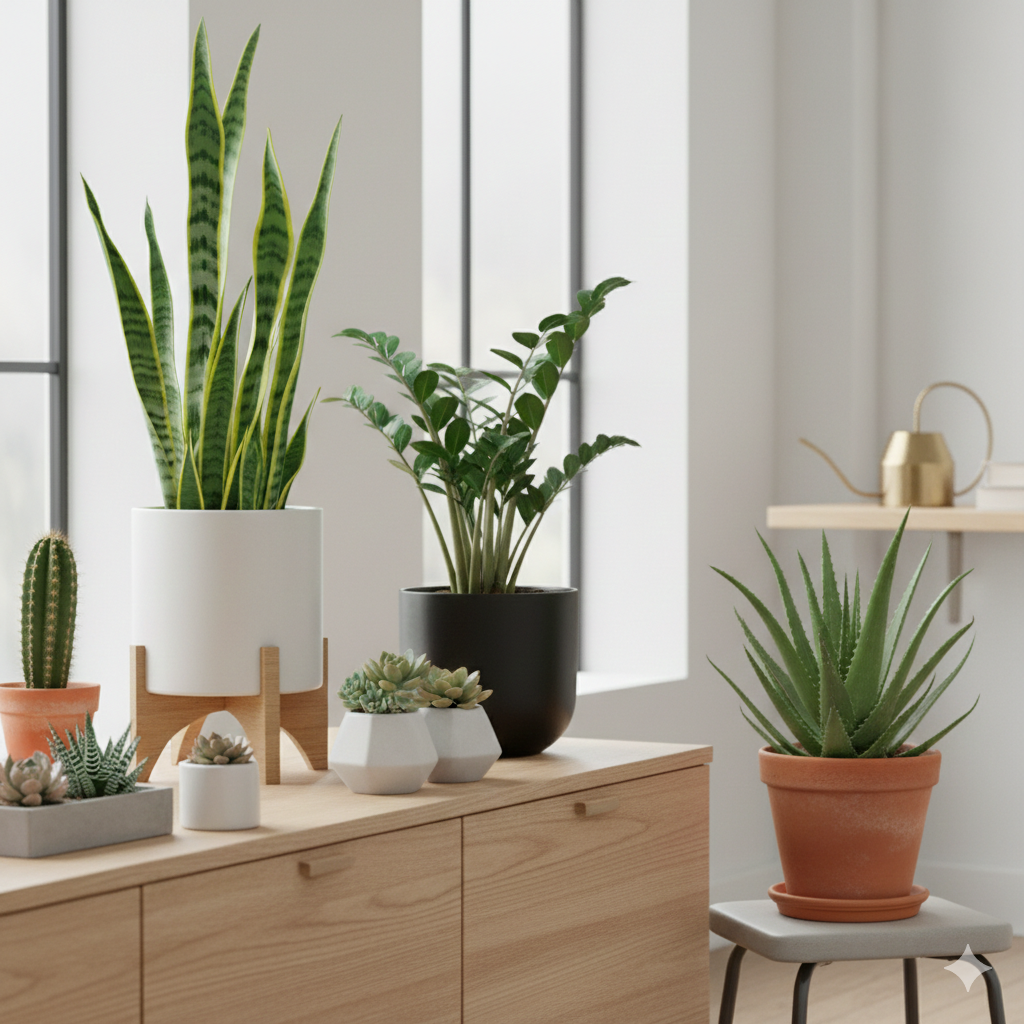
Indoor Plants That Require Little Water
Indoor plants are a great way to bring life, color, and texture into your home, but not everyone has the time or patience for high-maintenance greenery. For busy homeowners, apartment dwellers, or anyone who occasionally forgets to water their plants, low-water indoor plants are a game-changer. In this guide, we will explore the best indoor plants that require little water, how to care for them, and practical styling tips to make them thrive in your living space.
Why Choose Indoor Plants That Require Little Water
Choosing low-water indoor plants is not just convenient—it has multiple benefits:
-
Low maintenance: These plants survive longer without frequent watering, perfect for busy lifestyles.
-
Cost-effective: Less water and less attention reduce the risk of plant loss and replacement costs.
-
Versatile décor: Ideal for apartments, offices, and low-light spaces.
-
Resilient: Many drought-tolerant plants are hardy and can handle fluctuations in temperature and light.
Selecting the right low-water plants ensures your home stays green and inviting without constant upkeep.
Factors to Consider Before Choosing Low-Water Plants
When selecting indoor plants that require little water, consider these factors:
-
Light conditions
-
Bright light: Aloe Vera, Snake Plant, Jade Plant
-
Moderate/Low light: ZZ Plant, Sansevieria, Cast Iron Plant
-
-
Growth rate and size
-
Compact plants: Succulents, Haworthia, Echeveria
-
Medium to tall plants: Rubber Plant, Ponytail Palm
-
-
Humidity tolerance
-
Low-water plants often tolerate dry indoor air better than tropical plants.
-
Avoid overly humid spots unless recommended for a particular plant.
-
-
Maintenance level
-
Some low-water plants still require pruning or occasional fertilization.
-
Check if the plant needs soil rotation or repotting for long-term health.
-
By considering light, size, humidity, and maintenance, you can select plants that thrive effortlessly in your space.
Top Indoor Plants That Require Little Water
Here’s a list of the most reliable indoor plants that thrive with minimal watering:
1. Snake Plant (Sansevieria)
-
Watering needs: Once every 2–3 weeks.
-
Light tolerance: Low to bright indirect light.
-
Benefits: Air-purifying, upright leaves create visual height, very hardy.
-
Styling tip: Place in corners or along walls for a structured look.
2. ZZ Plant (Zamioculcas zamiifolia)
-
Watering needs: Every 3–4 weeks; very drought-tolerant.
-
Light tolerance: Low to bright indirect light.
-
Benefits: Glossy, dark green leaves add elegance; very forgiving for neglectful care.
-
Styling tip: Perfect for desks, side tables, or shelves.
3. Aloe Vera
-
Watering needs: Every 3 weeks; prefers dry soil between waterings.
-
Light tolerance: Bright, indirect sunlight.
-
Benefits: Medicinal properties, succulent texture adds visual interest.
-
Styling tip: Place near windowsills; works well in minimalist décor.
4. Jade Plant (Crassula ovata)
-
Watering needs: Every 2–3 weeks.
-
Light tolerance: Bright light preferred.
-
Benefits: Symbol of good luck, easy to shape and maintain.
-
Styling tip: Use decorative pots; tabletop or shelf placement is ideal.
5. Rubber Plant (Ficus elastica)
-
Watering needs: Every 2–3 weeks; allow soil to dry slightly.
-
Light tolerance: Moderate to bright indirect light.
-
Benefits: Large, glossy leaves; adds height and drama.
-
Styling tip: Corner placement for a statement plant in living rooms.
6. Ponytail Palm (Beaucarnea recurvata)
-
Watering needs: Once a month; drought-tolerant.
-
Light tolerance: Bright, indirect light.
-
Benefits: Unique bulbous base and long flowing leaves; sculptural appearance.
-
Styling tip: Floor-standing planter adds sculptural impact.
7. Cactus Varieties
-
Watering needs: Every 3–4 weeks; avoid overwatering.
-
Light tolerance: Full sun or bright indirect light.
-
Benefits: Minimal care, fun textures, and shapes.
-
Styling tip: Cluster multiple small cacti on coffee tables or shelves.
8. Haworthia
-
Watering needs: Once every 2–3 weeks.
-
Light tolerance: Bright indirect light.
-
Benefits: Compact succulent, perfect for small spaces.
-
Styling tip: Ideal for desktops, side tables, and small planters.
9. Cast Iron Plant (Aspidistra elatior)
-
Watering needs: Every 3–4 weeks.
-
Light tolerance: Low to medium light.
-
Benefits: Extremely hardy, thrives in low-light rooms.
-
Styling tip: Place in dark corners for greenery without maintenance stress.
10. Echeveria
-
Watering needs: Every 2–3 weeks; prefers dry soil.
-
Light tolerance: Bright indirect light.
-
Benefits: Rosette-shaped succulent; adds a pop of texture and color.
-
Styling tip: Cluster several Echeverias for a visually appealing tabletop display.
Styling Tips for Low-Water Indoor Plants
Even low-maintenance plants look better when styled intentionally:
1. Group Plants by Size
-
Place tall plants like Rubber Plant or Snake Plant behind smaller succulents or cacti.
-
Create layers for visual interest without overcrowding.
2. Use Stylish Pots
-
Neutral or monochrome pots complement minimalist décor.
-
Decorative baskets or colorful ceramics suit eclectic or boho interiors.
-
Consistency in planter style enhances room harmony.
3. Mix Textures
-
Combine glossy leaves (ZZ Plant, Rubber Plant) with spiky succulents or cacti.
-
Mix round and upright forms to create visual balance.
4. Choose Strategic Placement
-
Corners: Tall plants like Snake Plant or Rubber Plant.
-
Shelves: Small succulents, Haworthia, and trailing varieties.
-
Windowsills: Aloe Vera, Jade Plant, or small cacti that enjoy bright light.
5. Minimal Watering Routine
-
Mark your calendar for watering days to prevent overwatering.
-
Always let soil dry between waterings.
-
Use pots with drainage to avoid root rot.
6. Rotate Occasionally
-
Rotate plants every few weeks for even growth.
-
Helps all sides of the plant receive light and grow uniformly.
Benefits of Indoor Plants That Require Little Water
-
Time-saving: Minimal watering and care.
-
Aesthetic versatility: Fit into modern, minimalist, boho, or eclectic interiors.
-
Resilience: Hardy against neglect, temperature changes, and low humidity.
-
Improved air quality: Many low-water plants, like Snake Plants and Rubber Plants, purify air efficiently.
-
Stress reduction: Greenery provides a calming effect, improving mood and focus.
Low-water indoor plants are not only practical—they actively enhance your home environment and décor.
Common Mistakes to Avoid
-
Overwatering: Most low-water plants die from excess water, not neglect.
-
Ignoring light needs: Even drought-tolerant plants require some sunlight.
-
Crowding plants: Proper spacing ensures airflow and prevents mold or pests.
-
Neglecting pruning: Remove dead leaves or old growth to maintain aesthetics.
-
Using inappropriate pots: Avoid pots without drainage; waterlogging can kill even the hardiest plants.
By avoiding these mistakes, your low-water indoor plants will thrive for years.
Conclusion
Indoor plants that require little water are the perfect solution for anyone seeking greenery without the constant maintenance. Plants like Snake Plant, ZZ Plant, Aloe Vera, and Rubber Plant thrive in low-light or dry conditions while enhancing home décor. Pair them with stylish pots, mix textures and sizes, and place them strategically to create a vibrant, healthy indoor environment.
By choosing low-water indoor plants thoughtfully and styling them intentionally, your home can stay green, inviting, and stress-free, even if you occasionally forget to water.