
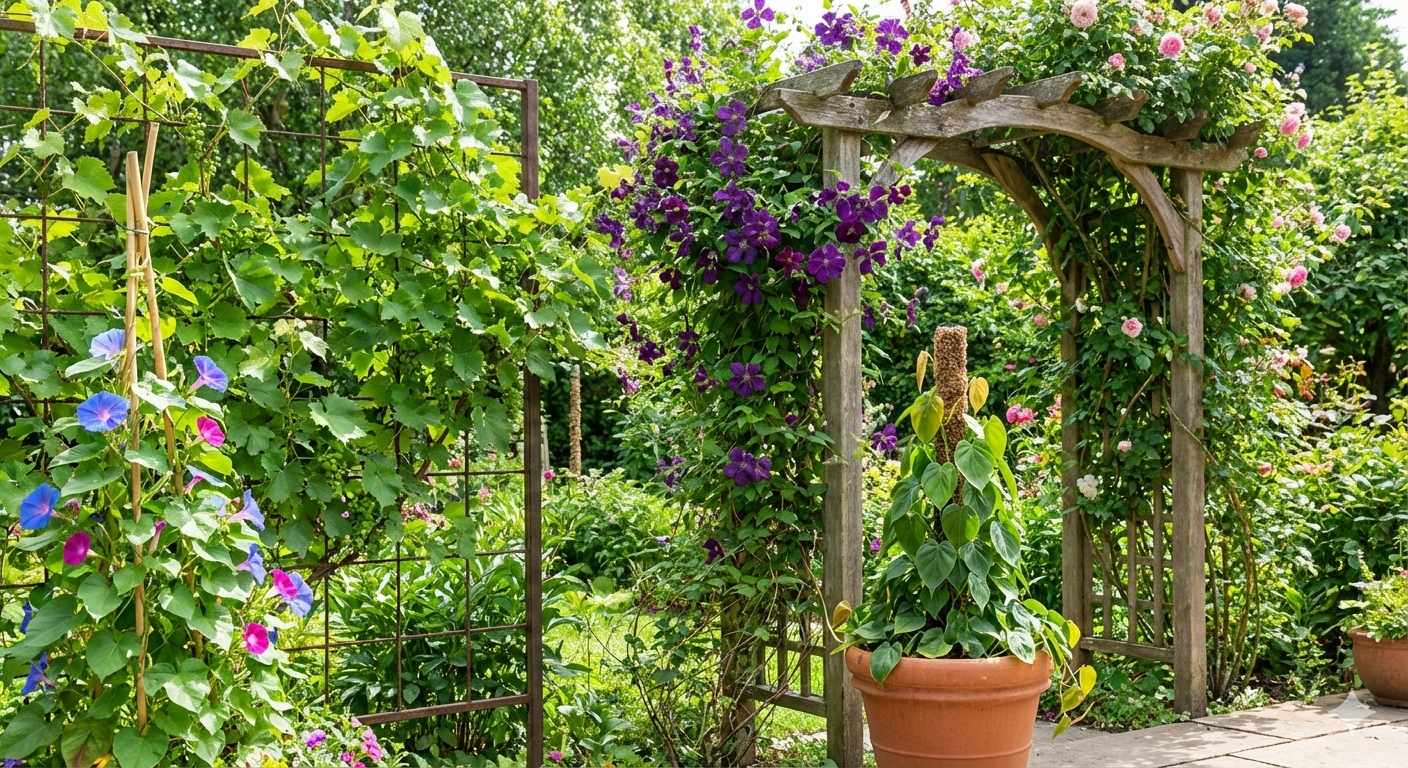
Climbing and vining plants can transform any garden or indoor space into a lush, green paradise. But without proper support, these plants can become tangled, droopy, or even damaged. Knowing how to support climbing and vining plants is essential for healthy growth, maximizing yields, and keeping your garden looking organized and attractive.
In this guide, we’ll cover practical, step-by-step methods to support your plants, from trellises to stakes, including tips for indoor and outdoor setups.
Why Supporting Climbing and Vining Plants Matters
Supporting climbing and vining plants is not just about aesthetics. Proper support:
-
Prevents stems from breaking under their own weight.
-
Improves airflow around leaves, reducing fungal infections.
-
Makes harvesting fruits or flowers easier.
-
Encourages vertical growth, saving space in small gardens.
-
Enhances sunlight exposure for all parts of the plant.
Plants like tomatoes, beans, cucumbers, passionflower, ivy, and clematis thrive when given the right support.
Types of Supports for Climbing and Vining Plants
Different climbing plants require different support systems. Here’s a breakdown of effective options:
1. Trellises
-
Trellises are ideal for vertical growth.
-
Can be made from wood, metal, or plastic.
-
Ensure the trellis is securely anchored to the ground.
-
Vining plants like cucumbers, peas, and morning glories perform best on trellises.
Tip: Space plants 6–12 inches apart to prevent overcrowding and allow airflow.
2. Stakes
-
Stakes are perfect for single-stemmed climbers like tomatoes or pole beans.
-
Use bamboo, wood, or metal stakes at least 6–8 inches taller than the plant.
-
Tie the plant loosely with garden twine or soft ties to avoid cutting the stem.
3. Arbors and Pergolas
-
Large, decorative structures provide long-term support for heavy vines like wisteria, grapevines, or passionflower.
-
Ensure the structure can handle the plant’s mature weight.
-
Train the vines gradually to grow along the framework.
4. Wire and String Systems
-
Horizontal wires or vertical strings can create a flexible support network.
-
Ideal for beans, cucumbers, or sweet peas.
-
Strings should be tensioned and anchored at the top and bottom for stability.
5. Netting
-
Garden netting is versatile and easy to install.
-
Works well for light vines like peas or morning glories.
-
Provides many attachment points for plants to grab and climb naturally.
Step-by-Step Guide to Supporting Your Plants
Step 1: Identify Your Plant Type
-
Twining plants wrap around a support (e.g., morning glory).
-
Tendrils climbers use specialized stems to attach (e.g., peas, cucumbers).
-
Scrambling plants require tying to a support (e.g., tomatoes).
Knowing your plant type ensures you choose the right support system.
Step 2: Install Support Early
-
Install trellises, stakes, or wires before the plant grows too tall.
-
Early support prevents damage from bending or tangling.
Step 3: Train the Vines
-
Gently guide stems toward the support.
-
Tie plants loosely using soft twine or garden clips.
-
Avoid tight knots; plants need room to grow.
Step 4: Prune Regularly
-
Remove dead or crowded stems to promote airflow.
-
Pruning also encourages stronger main stems for climbing.
Step 5: Monitor Growth
-
Check ties regularly; adjust as the plant grows.
-
Make sure the plant is not rubbing against rough surfaces which may damage stems.
Supporting Plants in Small Spaces
Even limited spaces can host healthy climbing plants:
-
Vertical gardening: Use walls, fences, or narrow trellises.
-
Hanging baskets: Train vines like sweet peas or pothos to trail down.
-
Window boxes with trellises: Perfect for urban balconies.
Vertical growth maximizes light exposure and keeps plants off the ground, reducing pest problems.
Tips for Indoor Climbing Plants
Indoor climbers like pothos, philodendrons, and ivy require slightly different care:
-
Use moss poles or stakes in pots for vertical growth.
-
Provide indirect sunlight for healthy leaf color and growth.
-
Rotate plants regularly to encourage even climbing on all sides.
-
Indoor vines may need lighter support, as they’re not exposed to wind or rain.
Common Mistakes to Avoid
-
Choosing weak supports: Thin or unstable trellises can collapse under weight.
-
Tying stems too tightly: Can cut or damage the plant.
-
Ignoring early growth: Untrained vines become tangled and hard to manage.
-
Neglecting pruning: Crowded stems reduce airflow, inviting pests and diseases.
-
Not anchoring supports properly: Ensure stakes or trellises are deep enough in soil.
Best Practices for Long-Term Support
-
Inspect supports seasonally for wear or damage.
-
Replace broken or leaning trellises immediately.
-
Rotate plants if possible for balanced growth and sunlight exposure.
-
Mulch around the base to retain moisture and protect roots from stress.
Top Plants That Benefit from Support
-
Vegetables: Tomatoes, cucumbers, pole beans, peas.
-
Flowers: Morning glory, clematis, honeysuckle.
-
Indoor vines: Pothos, philodendrons, monstera.
-
Fruiting climbers: Passionfruit, grapes.
Supporting these plants ensures maximum yield, stronger stems, and a healthier overall plant.
Conclusion
Supporting climbing and vining plants is essential for healthy growth, space efficiency, and a beautiful garden. Choosing the right type of support, training your plants early, pruning, and monitoring growth ensures your vines thrive. Whether indoors or outdoors, vertical gardening allows you to enjoy lush foliage, vibrant flowers, and bountiful harvests while keeping your garden organized and stress-free.
By following these practical, step-by-step methods, you’ll provide your plants with the foundation they need to climb successfully and flourish.