
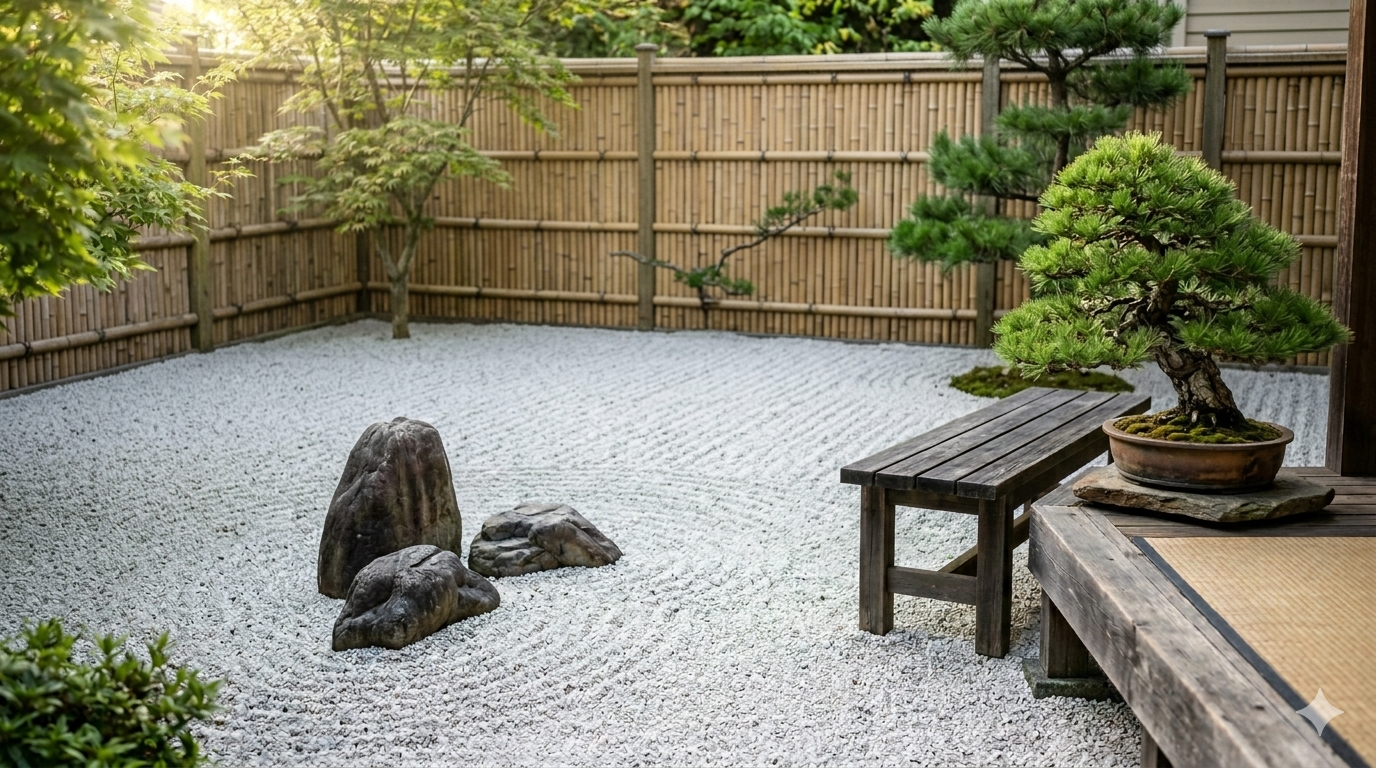
Before we dive in, let me ask you something simple. When was the last time you sat somewhere completely quiet? No phone buzzing. No noise. Just stillness.
That’s exactly what a Zen garden is about. It’s not just decoration. It’s a space designed to calm your mind. And today, I’ll walk you step by step through how to create a relaxing Zen garden at home, whether you have a big backyard or just a tiny balcony.
Let’s break it down properly and do it the right way.
What Is a Zen Garden?
A Zen garden, also called a Japanese rock garden, is a minimalist landscape design inspired by traditional Japanese temples.
It typically includes:
-
Gravel or sand
-
Carefully placed rocks
-
Minimal plants
-
Open space
-
Clean lines
The idea isn’t to “decorate.” The idea is to create peace through simplicity.
In traditional Japanese culture, Zen gardens are designed for meditation. The raked sand represents water. The rocks symbolize mountains or islands. Every element has meaning.
And here’s the key: less is more.
Why Create a Zen Garden at Home?
Let’s be honest. Life is noisy.
Work. Notifications. Traffic. Stress.
A home Zen garden gives you a reset button.
Here’s what it does for you:
-
Reduces stress
-
Improves focus
-
Creates a peaceful outdoor corner
-
Increases property appeal
-
Encourages mindful living
You don’t need a temple. You just need intention.
Step 1: Choose the Right Location
First question: where will your Zen garden live?
It can be:
-
A backyard corner
-
A balcony
-
A patio
-
Indoors near a window
-
Even a tabletop mini garden
The key is quiet and low traffic.
You want a space where you can sit and breathe without interruption.
If you’re working with a small area, don’t worry. A Zen garden doesn’t need size. It needs intention.
Step 2: Plan the Layout Before You Build
Don’t just start placing rocks randomly.
Sketch your layout first.
Think about:
-
Where will the main rocks go?
-
Where will the gravel area sit?
-
Do you want a small path?
-
Will you include plants or keep it minimal?
Traditional Zen gardens use asymmetry. Avoid placing everything in straight lines. Nature isn’t symmetrical, and your design shouldn’t feel rigid.
Balance matters more than perfection.
Step 3: Prepare the Ground
If you’re building outdoors, you must prepare the surface properly.
Here’s what to do:
-
Clear the area of grass and weeds.
-
Level the ground.
-
Add landscaping fabric to prevent weed growth.
-
Add a wooden, stone, or metal border to contain gravel.
This step is important. If you skip it, weeds will ruin the clean look within weeks.
Clean foundation equals long-term peace.
Step 4: Add Gravel or Sand
This is the heart of your Zen garden.
Use:
-
White gravel
-
Crushed granite
-
Fine sand
-
Light-colored stone
Spread it evenly across the area, about 2–3 inches deep.
Once laid, use a rake to create patterns.
Common rake patterns include:
-
Straight lines (calm water)
-
Circular waves around rocks
-
Flowing curves
Raking is not just decoration. It’s meditation.
Every time you rake, you reset your mind.
Step 5: Select and Place Rocks Carefully
Rocks are not random decorations. They are focal points.
Choose natural stones with irregular shapes.
Place them in odd numbers. Three is ideal.
Position them slightly off-center. This creates visual balance.
Avoid:
-
Perfect symmetry
-
Perfect spacing
-
Overcrowding
In Zen design, empty space is powerful.
Step 6: Add Minimal Plants
Not all Zen gardens have plants. Some use only rocks and gravel.
But if you want greenery, choose carefully.
Good options include:
-
Moss
-
Bamboo
-
Japanese maple
-
Small shrubs
-
Bonsai
Keep it subtle. The goal is calm, not jungle.
Use plants as accents, not main characters.
Step 7: Consider a Water Element (Optional)
Some modern Zen gardens include water features.
Options:
-
Small fountain
-
Stone basin
-
Bamboo water spout
Water adds sound. And sound enhances relaxation.
But keep it soft. Loud fountains defeat the purpose.
Step 8: Add a Sitting Area
You’re not building this just to look at it.
Add a place to sit.
It can be:
-
A wooden bench
-
A stone seat
-
A simple floor cushion
Place it where you can see the entire layout.
That’s your meditation spot.
Step 9: Keep the Color Palette Simple
Zen gardens rely on neutral tones.
Stick with:
-
White
-
Gray
-
Black
-
Natural wood
-
Soft green
Avoid bright flowers and bold colors.
Remember: the goal is peace, not excitement.
Step 10: Maintain Your Zen Garden
This is important.
A messy Zen garden loses its effect.
Maintenance includes:
-
Raking gravel weekly
-
Removing leaves
-
Cleaning stones
-
Trimming plants
Think of maintenance as part of the ritual.
It’s not a chore. It’s mindfulness practice.
How to Create a Relaxing Zen Garden at Home (Quick Summary Steps)
If you want the simple version, here it is:
-
Choose a quiet space.
-
Clear and level the ground.
-
Add landscaping fabric.
-
Install borders.
-
Spread gravel or sand.
-
Place rocks asymmetrically.
-
Add minimal plants.
-
Rake patterns into gravel.
-
Create a sitting space.
-
Maintain regularly.
Simple. Calm. Intentional.
Small Space Zen Garden Ideas
Don’t have a backyard? No problem.
You can create:
Balcony Zen Garden
Use a wooden tray filled with sand and stones. Add a small bonsai.
Indoor Tabletop Zen Garden
Mini rake. Fine sand. Three stones. That’s it.
Corner Patio Zen Setup
Add gravel flooring and a single Japanese maple.
The size doesn’t matter. The feeling does.
Common Mistakes to Avoid
Let’s be real. Many people overdo it.
Avoid these mistakes:
-
Adding too many decorations
-
Mixing too many plant types
-
Ignoring maintenance
-
Using colorful garden ornaments
-
Overcrowding rocks
Zen design is about restraint.
When in doubt, remove something.
How Much Does It Cost?
Here’s a rough estimate:
| Item | Estimated Cost |
|---|---|
| Gravel/Sand | $50 – $200 |
| Rocks | $30 – $150 |
| Landscaping Fabric | $20 – $50 |
| Plants | $30 – $300 |
| Border Materials | $50 – $250 |
| Optional Fountain | $100 – $500 |
You can build a simple Zen garden for under $300.
Luxury versions can cost more, depending on materials.
Can You Create a Zen Garden Indoors?
Yes.
Indoor Zen gardens are popular because they require minimal space.
Use:
-
Decorative trays
-
Sand
-
Small stones
-
Mini rake
Place it near natural light.
Even a small desk Zen garden can reduce stress during work hours.
Benefits of a Zen Garden for Mental Health
Here’s something interesting.
Research consistently shows that exposure to nature reduces cortisol levels and improves mental clarity.
A Zen garden mimics natural landscapes in a controlled way.
Raking patterns helps:
-
Improve focus
-
Lower anxiety
-
Encourage mindful breathing
You’re not just designing a garden.
You’re designing calm.
Design Styles You Can Try
Traditional Japanese Style
Minimal rocks. Wide gravel area. Moss accents.
Modern Minimalist Zen
Concrete borders. White stones. Clean geometric layout.
Hybrid Zen
Combine Zen structure with small succulents or soft lighting.
Choose the style that fits your home’s architecture.
Final Thoughts
If you’ve been wondering how to create a relaxing Zen garden at home, now you know it’s not complicated.
It’s about:
-
Simplicity
-
Balance
-
Clean space
-
Intention
You don’t need a massive budget. You don’t need expert skills.
You just need a quiet corner and the desire to slow down.
Build it once. Maintain it regularly. Sit in it often.
And let it do what it was always meant to do: bring peace into your life.
FAQs
1. Do Zen gardens require water?
No. Traditional Zen gardens use sand and rocks to symbolize water. Real water is optional.
2. Can I build a Zen garden on concrete?
Yes. Use a raised wooden frame filled with gravel.
3. How often should I rake the gravel?
Once a week is ideal. More often if you want a fresh pattern.
4. What plants work best in a Zen garden?
Moss, bamboo, bonsai, and small shrubs are ideal choices.
5. Is a Zen garden expensive to maintain?
No. Maintenance is simple and low-cost once installed