
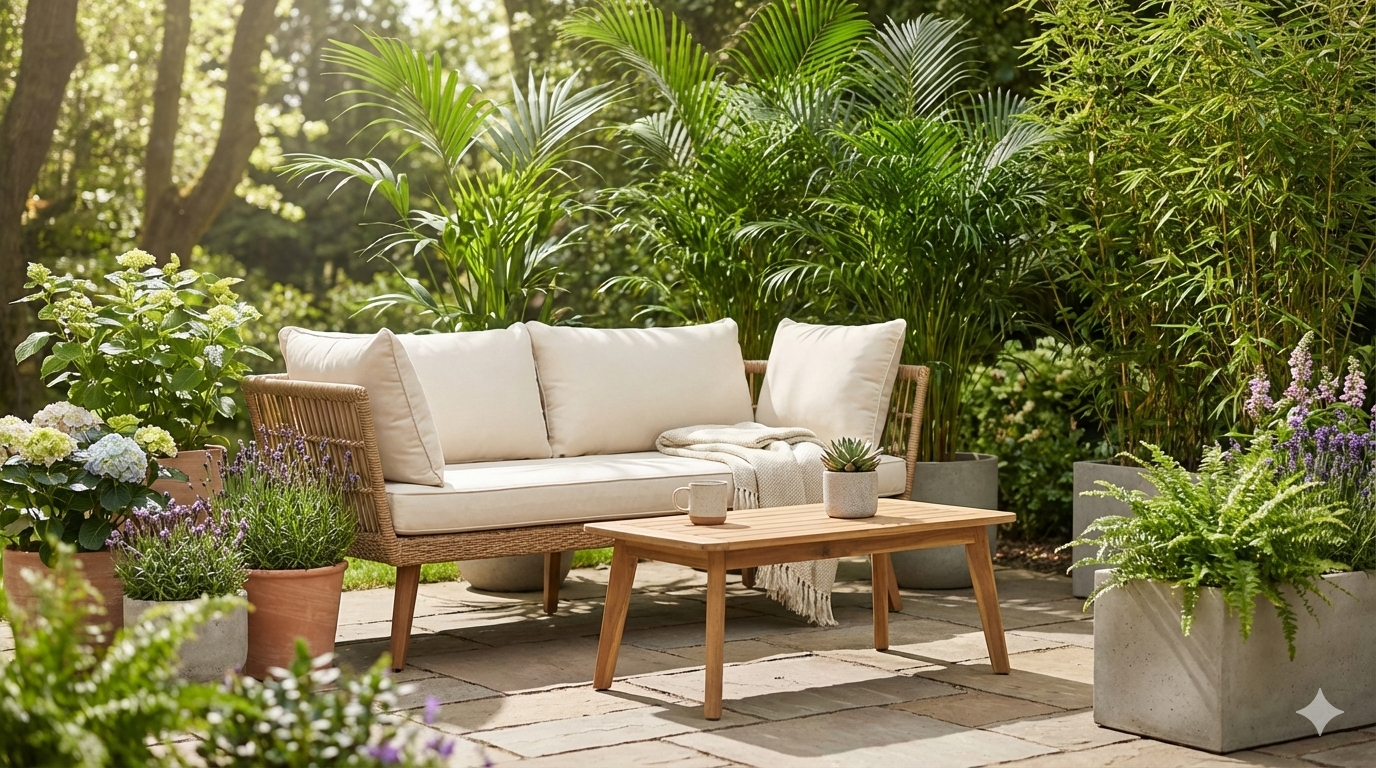
How to Combine Plants and Furniture in Garden Design
Designing an outdoor space is not only about choosing beautiful plants or buying stylish furniture. The real transformation happens when both elements work together in a unified layout. Learning how to combine plants and furniture in garden design allows you to create a space that feels balanced, functional, and visually appealing throughout the year.
Whether you are designing a balcony, patio, backyard, or terrace, the principles are the same. The right combination improves comfort, highlights greenery, and turns any outdoor area into a welcoming living space.
Why Combining Plants and Furniture Matters
Plants provide texture, color, shade, and movement. Furniture provides function, comfort, and structure. When combined properly, they create a natural outdoor room instead of scattered decorative pieces.
Benefits include:
-
Better visual balance between hard and soft elements
-
More comfortable seating with natural shade
-
Improved privacy using plants as living screens
-
Clear layout zones for relaxing, dining, or entertaining
-
A more cohesive garden style
Good garden design is not about filling space. It is about creating harmony between natural and structural elements.
Start With Functional Layout Planning
Before selecting plants or furniture, define how the garden will be used. Function determines placement.
Identify Activity Zones
Divide your outdoor space into zones:
-
Seating area
-
Dining area
-
Relaxation corner
-
Walkways
-
Decorative focal points
Plants should support these zones, not block them.
Leave Movement Space
Always keep clear walking paths between furniture pieces. Overcrowding reduces usability and makes even beautiful gardens feel uncomfortable.
Choose Furniture First, Then Plants
Furniture establishes the main structure of the layout. Plants should complement that structure.
Why Furniture First?
-
Determines traffic flow
-
Defines seating orientation
-
Helps decide plant size and placement
-
Prevents overcrowding later
Large furniture pieces require larger surrounding plants to maintain visual balance.
Use Plants to Frame Furniture Areas
One of the most effective design techniques is framing. Plants can visually define the edges of seating or dining areas.
Examples
-
Tall potted plants behind sofas create a natural backdrop
-
Medium shrubs around dining tables create a cozy enclosure
-
Low plants along pathways soften hard edges
This technique creates the feeling of an outdoor room.
Match Plant Scale With Furniture Size
Scale is critical in successful garden design.
Small Furniture + Large Plants (Imbalance)
Oversized plants can overwhelm compact seating areas. This makes the space feel crowded.
Large Furniture + Small Plants (Weak Visual Impact)
Tiny plants disappear next to large sofas or tables. The area looks unfinished.
Best Practice
-
Use tall plants near large seating arrangements
-
Use medium plants near side tables
-
Use low ground plants near walkways
Balanced proportions create visual harmony.
Combine Colors Between Plants and Furniture
Color coordination helps the entire garden look intentional rather than random.
Neutral Furniture Strategy
Neutral colors like gray, beige, white, or wood tones allow plants to become the visual focus.
Matching Accent Colors
-
Cushions can match flower colors
-
Planter colors can match furniture frames
-
Decorative accessories can connect plant tones and seating areas
Repeating color elements across the garden strengthens design unity.
Create Natural Shade Using Plants
Plants are not only decorative. They can improve comfort.
Natural Shade Options
-
Tall ornamental grasses near seating areas
-
Climbing plants on pergolas or trellises
-
Small trees placed strategically near benches
Shade placement reduces heat and makes outdoor seating more usable during the day.
Use Vertical Plants Around Furniture
Vertical gardening adds depth without occupying floor space.
Good Vertical Placement Areas
-
Behind outdoor sofas
-
Near fences behind seating areas
-
Around pergola columns
-
Balcony corners
Climbing plants like jasmine, ivy, or flowering vines add height and softness.
Combine Hardscape and Softscape Layers
Professional garden designers use layered design:
-
Ground layer: low plants and ground covers
-
Middle layer: medium shrubs and containers
-
Upper layer: tall plants, trees, or vertical climbers
Furniture sits naturally within these layers instead of appearing disconnected.
Best Plant Types for Furniture Integration
Some plants work better around seating and dining areas because they require less maintenance and shed fewer leaves.
Recommended Options
-
Ornamental grasses
-
Evergreen shrubs
-
Lavender and rosemary
-
Boxwood
-
Ferns for shaded seating areas
-
Succulents for modern outdoor layouts
These plants maintain structure while requiring minimal cleanup.
Lighting Integration With Plants and Furniture
Lighting connects the entire design during evening hours.
Effective Lighting Methods
-
Ground lights highlighting plants near seating
-
String lights across pergolas
-
Lanterns placed near potted plants
-
Solar pathway lights guiding movement
Lighting improves both aesthetics and safety.
How to Combine Plants and Furniture in Small Gardens
Small spaces require careful planning but can look even more impressive when designed correctly.
Small Space Tips
-
Use vertical planters behind seating
-
Choose foldable or compact furniture
-
Use multipurpose furniture with storage
-
Place corner plants to open central space
-
Select light-colored furniture to make space appear larger
Balancing open space with greenery is essential.
Outdoor Dining Area Styling Ideas
Dining spaces benefit greatly from plant integration.
Effective Dining Layout
-
Medium-height plants around table edges
-
Herb planters near dining zones for fresh ingredients
-
Hanging plants above pergola dining areas
-
Low decorative plants as table centerpieces
These elements create a restaurant-like outdoor atmosphere.
Creating Privacy Using Plants Around Furniture
Plants can replace artificial walls while keeping the space natural.
Privacy Planting Techniques
-
Tall hedge plants along fence lines
-
Bamboo screens near seating areas
-
Rows of large potted plants forming green walls
-
Climbing vines on privacy panels
This method adds beauty while increasing comfort.
Seasonal Plant Rotation Around Furniture
Seasonal changes keep the garden dynamic.
Seasonal Design Ideas
-
Spring flowering pots near seating areas
-
Summer tropical plants around lounges
-
Autumn foliage plants adding warm tones
-
Winter evergreen arrangements maintaining structure
Rotating containers is an easy update without redesigning the entire layout.
Common Mistakes to Avoid
Many outdoor spaces fail because of simple design errors.
Avoid These Mistakes
-
Blocking walking paths with plants
-
Using too many different furniture styles
-
Mixing plant sizes without planning
-
Ignoring sunlight exposure around seating areas
-
Overcrowding small patios with large pots
Simplicity usually produces the most elegant result.
Step-by-Step: How to Combine Plants and Furniture in Garden Design
Step 1: Define the Purpose of the Space
Relaxation, dining, entertaining, or family seating.
Step 2: Place Main Furniture Pieces
Position sofas, chairs, or tables first.
Step 3: Add Structural Plants
Place tall plants behind seating areas for framing.
Step 4: Fill Middle Layer
Add medium shrubs or containers near edges.
Step 5: Add Accent Plants
Use small decorative plants to soften pathways.
Step 6: Integrate Lighting
Highlight plants and seating areas for nighttime use.
Step 7: Maintain Balance
Leave enough open space for comfort and movement.
Design Styles That Combine Plants and Furniture Successfully
Modern Garden Style
-
Minimal furniture lines
-
Neutral colors
-
Geometric planters
-
Structured plants like boxwood
Tropical Garden Style
-
Wooden or rattan furniture
-
Large leafy plants
-
Dense greenery creating privacy
Rustic Garden Style
-
Natural wood seating
-
Clay or stone pots
-
Flowering shrubs and herbs
Mediterranean Style
-
Terracotta pots
-
Olive trees and lavender
-
Light-colored furniture
Matching style elements ensures visual consistency.
Maintenance Tips for Long-Term Balance
Design is only the first step. Maintenance keeps the layout attractive.
-
Trim plants regularly to maintain scale
-
Rotate container plants for even sunlight
-
Clean furniture surfaces to maintain visual contrast
-
Replace seasonal flowers when needed
-
Check irrigation systems near seating areas
A maintained garden always appears professionally designed.
Conclusion
Understanding how to combine plants and furniture in garden design allows any outdoor space to become functional, stylish, and comfortable. The key principles are simple: plan the layout first, choose furniture as the structural foundation, then integrate plants in balanced layers that support movement, shade, privacy, and visual harmony.
When plants and furniture work together rather than competing for attention, the result is a cohesive outdoor living space that looks intentional, welcoming, and enjoyable throughout every season.