
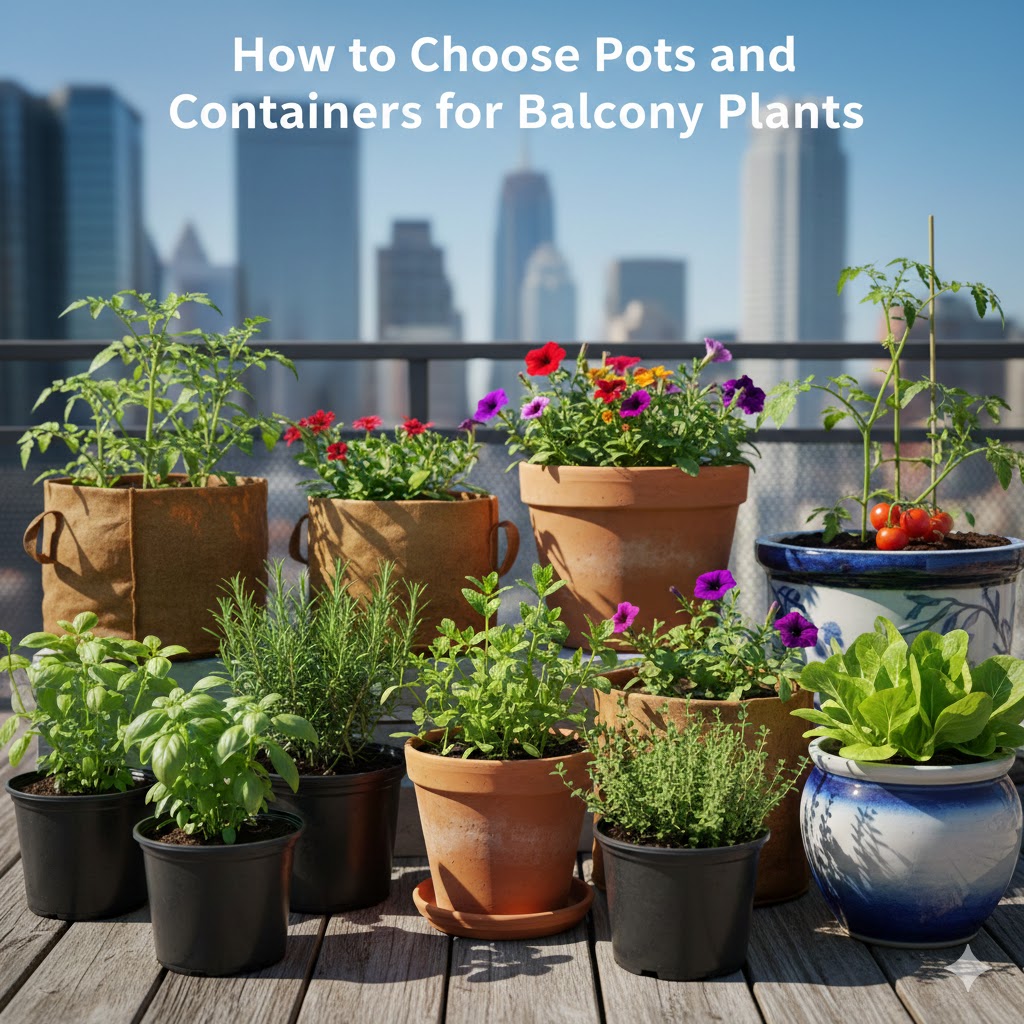
Introduction
Choosing the right pots and containers for balcony plants is one of the most important decisions you’ll make as a home gardener. The container you select affects plant health, root growth, water retention, and even how often you need to maintain your garden.
Many balcony gardening problems—wilting plants, root rot, poor growth—start with the wrong container choice. This guide explains how to choose pots and containers for balcony plants based on plant type, space, climate, and maintenance needs. By the end, you’ll know exactly what to buy and why.
Why Choosing the Right Container Matters
Containers are more than decoration. They control almost every aspect of plant growth in small spaces.
A good container helps:
-
Roots grow freely
-
Soil drain properly
-
Moisture stay balanced
-
Plants survive heat, wind, and limited space
A poor container can:
-
Trap excess water
-
Overheat roots
-
Restrict growth
-
Kill plants even with proper care
Understanding container basics prevents wasted money and failed plants.
How to Choose Pots and Containers for Balcony Plants (Quick Answer)
If you’re looking for a fast answer, here’s the foundation:
-
Choose pots with drainage holes
-
Match pot size to plant root depth
-
Select lightweight materials for balconies
-
Use weather-resistant containers
-
Avoid decorative pots without function
Below, we break each factor down in detail.
What Size Pot Is Best for Balcony Plants?
Why Pot Size Matters
Pot size directly affects:
-
Root expansion
-
Water availability
-
Nutrient absorption
Small pots dry faster and restrict growth. Oversized pots can hold excess moisture.
General Pot Size Guidelines
| Plant Type | Recommended Pot Size |
|---|---|
| Herbs | 6–8 inches |
| Flowers | 8–12 inches |
| Vegetables | 12–18 inches |
| Shrubs | 18+ inches |
Depth Is More Important Than Width
-
Deep-root plants need tall containers
-
Shallow plants can grow in wide pots
-
Always research root depth before buying
What Material Is Best for Balcony Plant Pots?
Different materials affect temperature, moisture, weight, and durability.
Plastic Pots
Best for most balconies
Pros:
-
Lightweight
-
Affordable
-
Retains moisture
-
Easy to move
Cons:
-
Can fade in sunlight
-
Lower airflow to roots
Best for:
-
Herbs
-
Flowers
-
Beginners
Terracotta and Clay Pots
Pros:
-
Breathable
-
Natural look
-
Good airflow
Cons:
-
Heavy
-
Dries soil quickly
-
Cracks in cold weather
Best for:
-
Succulents
-
Drought-tolerant plants
Ceramic Pots (Glazed)
Pros:
-
Decorative
-
Moisture retention
-
Stable
Cons:
-
Heavy
-
Often lacks drainage
-
Can be expensive
Best for:
-
Permanent plant placements
Fabric Grow Bags
Pros:
-
Excellent drainage
-
Prevents root circling
-
Lightweight
-
Foldable
Cons:
-
Dries quickly
-
Less decorative
Best for:
-
Vegetables
-
Tomatoes
-
Root crops
Metal Pots
Pros:
-
Modern appearance
-
Durable
Cons:
-
Overheats roots
-
Rust risk
-
Poor insulation
Best for:
-
Decorative outer containers only
Should Balcony Pots Have Drainage Holes?
Yes—Always
Drainage holes prevent:
-
Root rot
-
Fungal disease
-
Soil compaction
Without drainage, excess water suffocates roots.
What If the Pot Has No Holes?
Options:
-
Drill holes (if material allows)
-
Use as a decorative cover pot
-
Add inner plastic pot with drainage
Never plant directly into a sealed container.
How Many Drainage Holes Are Enough?
-
Small pots: 1–2 holes
-
Medium pots: 3–5 holes
-
Large containers: 5+ holes
Holes should be:
-
At the bottom
-
Evenly spaced
-
Not blocked by saucers
How to Choose Containers Based on Plant Type
Herbs
-
Small to medium pots
-
Excellent drainage
-
Shallow depth
Examples:
-
Basil
-
Mint
-
Parsley
Flowers
-
Medium depth
-
Stable pots to prevent tipping
-
Good airflow
Examples:
-
Petunias
-
Geraniums
-
Begonias
Vegetables
-
Large containers
-
Deep soil
-
Strong drainage
Examples:
-
Tomatoes
-
Peppers
-
Lettuce
Indoor Plants on Balconies
-
Decorative pots with inner drainage
-
Stable materials
-
Moderate moisture retention
Examples:
-
Snake plant
-
Pothos
-
ZZ plant
How Balcony Climate Affects Container Choice
Hot and Sunny Balconies
Choose:
-
Light-colored pots
-
Plastic or fabric
-
Insulated containers
Avoid:
-
Metal
-
Dark ceramic
Windy Balconies
Choose:
-
Heavy containers
-
Wide bases
-
Floor-standing pots
Avoid:
-
Hanging baskets
-
Tall narrow pots
Rain-Exposed Balconies
Choose:
-
Elevated pots
-
Fast-draining materials
-
Raised feet or stands
Are Hanging Pots Good for Balcony Plants?
Hanging pots save space but require planning.
Pros
-
Maximizes vertical space
-
Decorative
-
Ideal for trailing plants
Cons
-
Dries quickly
-
Weight load
-
Water dripping issues
Best plants:
-
Ivy
-
Pothos
-
Spider plant
Self-Watering Pots: Are They Worth It?
Self-watering containers include a water reservoir.
Advantages
-
Reduced watering frequency
-
Stable moisture
-
Good for beginners
Disadvantages
-
Higher cost
-
Not suitable for all plants
-
Can cause root rot if misused
Best for:
-
Herbs
-
Leafy plants
-
Busy gardeners
How to Choose Lightweight Containers for Small Balconies
Weight matters for safety and mobility.
Choose:
-
Plastic
-
Fabric grow bags
-
Resin containers
Avoid:
-
Stone
-
Concrete
-
Solid ceramic (unless permanent)
Check your balcony’s weight limits if unsure.
How to Match Pots With Balcony Space
Small Balconies
-
Stackable containers
-
Vertical planters
-
Hanging pots
Medium Balconies
-
Rectangular planters
-
Rail planters
-
Medium floor pots
Large Balconies
-
Raised beds
-
Large decorative containers
-
Multi-plant arrangements
Common Mistakes When Choosing Balcony Pots
-
Buying decorative pots without drainage
-
Choosing pots too small
-
Ignoring material heat retention
-
Overcrowding containers
-
Mixing incompatible plants in one pot
Avoiding these mistakes saves time and plants.
How to Prepare a New Pot Before Planting
-
Clean the container
-
Check drainage holes
-
Add mesh or stones lightly
-
Fill with appropriate soil
-
Water soil before planting
Preparation improves plant survival.
Frequently Asked Questions
What is the best pot for balcony plants?
Plastic or resin pots with drainage holes are best for most balcony plants due to weight, durability, and moisture control.
Can I use buckets or recycled containers?
Yes, if they:
-
Have drainage holes
-
Are food-safe
-
Are clean and sturdy
How often should I change pots?
-
Small plants: every 1–2 years
-
Fast growers: yearly
-
Trees/shrubs: every 2–3 years
Expert Tip: Combine Function and Style
Choose simple functional pots for most plants. Use decorative containers only for focal points. Healthy plants always look better than stylish failures.
Conclusion
Learning how to choose pots and containers for balcony plants is the foundation of successful small-space gardening. The right container supports healthy roots, balanced moisture, and steady growth. Size, material, drainage, and climate all matter.
When you choose containers based on plant needs—not appearance alone—you reduce maintenance and increase success. With the right pots, even the smallest balcony can become a thriving garden.
If you apply the principles in this guide, your balcony plants will grow stronger, live longer, and require less effort over time.