
Introduction
Balancing soil moisture is one of the most important skills in plant care. Too much water can suffocate roots. Too little water can stop growth completely. Many plant problems begin not with pests or disease, but with improper moisture levels in the soil.
This guide explains how to balance soil moisture for healthy plants using practical, proven methods. You will learn how soil type, drainage, plant needs, and watering habits work together. By the end, you will know how to maintain consistent moisture without guesswork.
Why Soil Moisture Balance Matters for Plant Health
Plants rely on water to transport nutrients, support cell structure, and regulate temperature. Roots need both water and oxygen to function properly.
When soil is too wet:
-
Roots cannot breathe
-
Fungal diseases develop
-
Nutrients wash away
When soil is too dry:
-
Roots stop absorbing nutrients
-
Leaves wilt and yellow
-
Growth slows or stops
Balanced moisture creates the ideal environment for healthy root systems and strong plant growth.
What Does Balanced Soil Moisture Mean?
Balanced soil moisture means the soil is:
-
Moist, not soaked
-
Able to drain excess water
-
Able to retain enough water between watering
Healthy soil holds water like a sponge. It releases moisture slowly while allowing air pockets for oxygen.
How to Balance Soil Moisture for Healthy Plants (Quick Steps)
If you want a simple framework, follow these steps:
-
Choose the right soil mix
-
Use containers or beds with proper drainage
-
Water based on plant needs, not schedule
-
Improve soil structure with organic matter
-
Monitor moisture regularly
Each step is explained in detail below.
Understanding Different Soil Types and Moisture Retention
Soil type determines how long moisture stays available to plant roots.
Sandy Soil
Characteristics:
-
Drains very quickly
-
Low water retention
-
Poor nutrient holding
Best practices:
-
Add compost or peat moss
-
Water more frequently
-
Use mulch to reduce evaporation
Clay Soil
Characteristics:
-
Holds water for long periods
-
Poor drainage
-
Compacts easily
Best practices:
-
Add organic matter
-
Improve aeration
-
Avoid overwatering
Loamy Soil (Ideal)
Characteristics:
-
Balanced drainage and retention
-
Rich in organic matter
-
Supports strong root growth
Best practices:
-
Maintain organic content
-
Avoid soil compaction
How Drainage Affects Soil Moisture Balance
Drainage controls how excess water leaves the soil.
Poor drainage causes:
-
Root rot
-
Oxygen deprivation
-
Stunted growth
Good drainage:
-
Prevents waterlogging
-
Keeps roots oxygenated
-
Supports microbial life
How to Improve Drainage
-
Use containers with drainage holes
-
Elevate pots slightly
-
Add perlite or coarse sand to soil
-
Avoid compacting soil
According to university extension research, proper drainage is one of the top factors in preventing root diseases in plants.
How Often Should You Water to Maintain Balanced Moisture?
There is no universal watering schedule. Plant type, climate, soil, and container size all matter.
Factors That Affect Watering Frequency
-
Plant species
-
Pot size or bed depth
-
Temperature and humidity
-
Sun exposure
-
Soil composition
Water when soil needs it, not when the calendar says so.
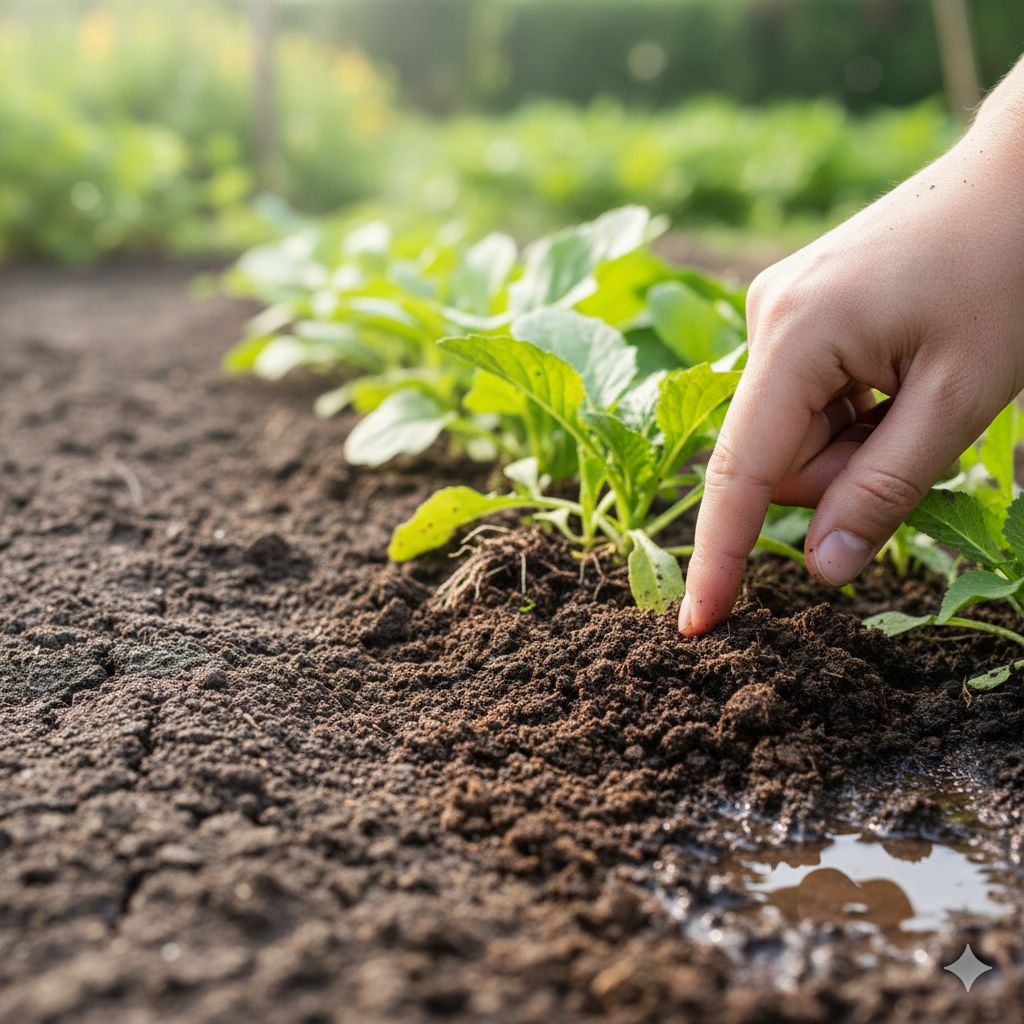
The Finger Test (Simple and Effective)
-
Insert your finger 2–3 inches into the soil
-
If soil feels dry, water
-
If soil feels moist, wait
This method helps prevent overwatering and underwatering.
Signs Soil Is Too Wet or Too Dry
Signs of Excess Moisture
-
Yellowing leaves
-
Soft or black roots
-
Mold on soil surface
-
Wilting despite wet soil
Signs of Dry Soil
-
Crispy leaf edges
-
Drooping leaves
-
Slow growth
-
Soil pulling away from container edges
Recognizing these signs early helps you correct moisture imbalance quickly.
How to Improve Soil Moisture Retention Naturally
Healthy soil structure holds water efficiently.
Add Organic Matter
Organic materials improve both drainage and retention.
Best options:
-
Compost
-
Aged manure
-
Leaf mold
-
Coconut coir
These materials create spaces in the soil that hold water while allowing airflow.
Use Mulch to Reduce Moisture Loss
Mulch slows evaporation and stabilizes soil temperature.
Effective mulch types:
-
Straw
-
Bark chips
-
Shredded leaves
-
Compost
Apply a 2–3 inch layer around plants, keeping it away from stems.
How Container Size Impacts Soil Moisture
Small containers dry out faster. Large containers retain moisture longer.
Guidelines:
-
Match pot size to root depth
-
Avoid shallow pots for deep-root plants
-
Ensure proper drainage regardless of size
Choosing the correct container is critical for moisture balance.
How Climate Affects Soil Moisture Balance
Hot and Dry Climates
-
Water evaporates faster
-
Soil dries quickly
Solutions:
-
Water early morning
-
Use mulch
-
Choose moisture-retentive soil
Cool or Humid Climates
-
Soil stays wet longer
-
Higher disease risk
Solutions:
-
Improve drainage
-
Reduce watering frequency
-
Increase airflow
Best Time of Day to Water for Moisture Control
Morning watering is ideal.
Benefits:
-
Reduces evaporation
-
Allows leaves to dry
-
Improves water absorption
Evening watering can increase disease risk due to prolonged moisture.
How to Balance Soil Moisture for Different Plant Types
Vegetables
-
Require consistent moisture
-
Sensitive to stress
Tips:
-
Water deeply
-
Mulch heavily
-
Avoid drying cycles
Houseplants
-
Prefer controlled moisture
-
Sensitive to overwatering
Tips:
-
Use well-draining soil
-
Allow topsoil to dry slightly
-
Avoid standing water
Succulents and Cacti
-
Require minimal moisture
-
Prefer dry soil between watering
Tips:
-
Use fast-draining soil
-
Water sparingly
-
Avoid humidity buildup
Tools That Help Monitor Soil Moisture
Moisture Meters
Pros:
-
Quick readings
-
Useful for beginners
Cons:
-
Not always accurate
-
Should be used with visual checks
Smart Irrigation Systems
-
Adjust watering based on weather
-
Reduce water waste
-
Maintain consistent moisture
These tools support precision watering, especially in larger gardens.
Common Mistakes That Disrupt Soil Moisture Balance
-
Watering on a fixed schedule
-
Ignoring soil type
-
Using pots without drainage
-
Overcompacting soil
-
Neglecting seasonal changes
Avoiding these mistakes leads to healthier plants with less effort.
How to Fix Moisture Problems Step by Step
If Soil Is Too Wet
-
Stop watering immediately
-
Improve drainage
-
Remove excess mulch
-
Allow soil to dry slightly
If Soil Is Too Dry
-
Water deeply and slowly
-
Improve soil organic content
-
Add mulch
-
Increase watering frequency gradually
Long-Term Soil Moisture Management Tips
-
Test soil regularly
-
Adjust watering with seasons
-
Refresh soil yearly
-
Observe plant behavior closely
Healthy plants communicate through their leaves and growth patterns.
Frequently Asked Questions
How do I know if my soil moisture is balanced?
Soil should feel damp but not soggy. Plants should show steady growth without yellowing or wilting.
Can soil moisture affect nutrient absorption?
Yes. Improper moisture prevents roots from absorbing nutrients efficiently.
Should all plants have the same moisture level?
No. Each plant has specific moisture needs based on species and growth stage.
Conclusion
Learning how to balance soil moisture for healthy plants is essential for long-term plant success. Balanced moisture supports root health, nutrient uptake, and steady growth. It also reduces disease and maintenance issues.
By understanding soil type, drainage, plant needs, and environmental factors, you can maintain ideal moisture levels with confidence. When soil moisture is balanced, plants thrive naturally with less intervention.
Consistent observation and small adjustments are the key to healthy, resilient plants year-round.