
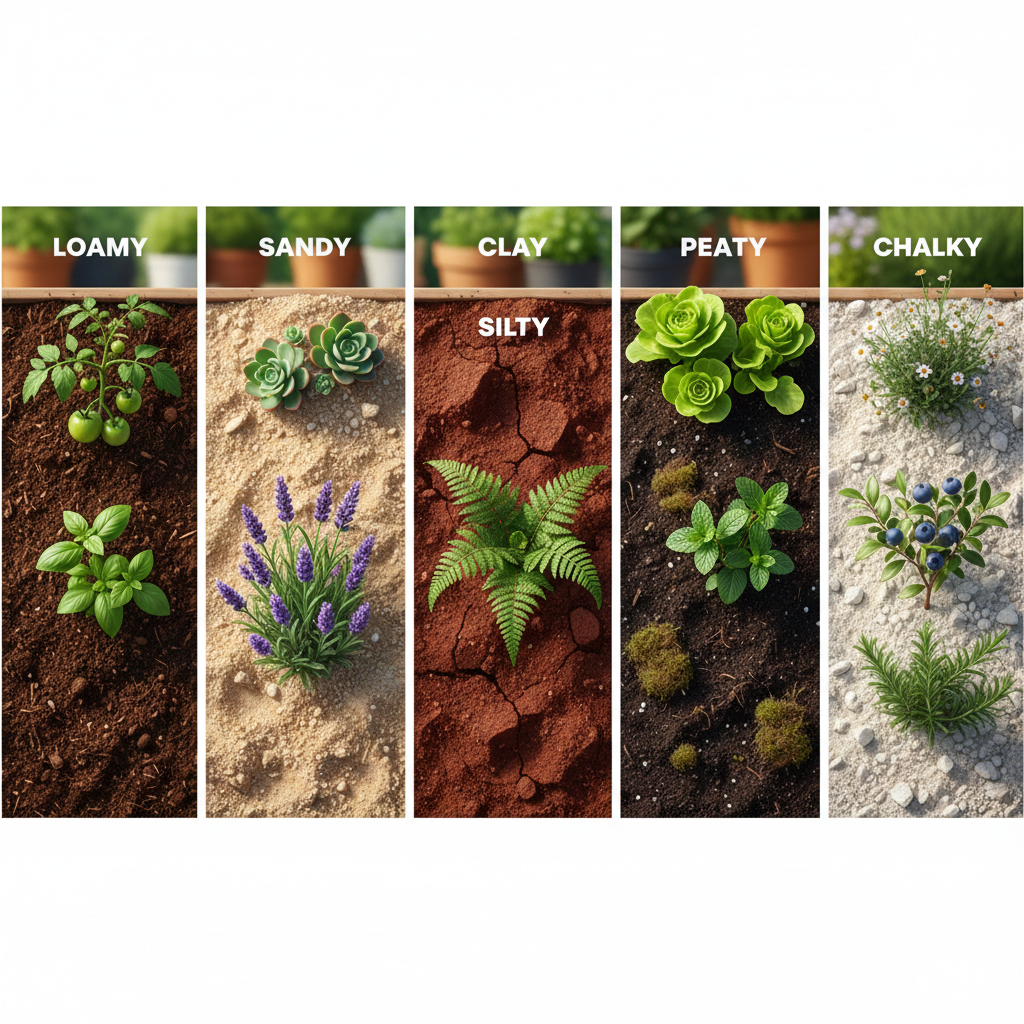
Best Soil Types for Different Plants: A Complete Guide for Healthy Growth
Choosing the right soil for your plants is critical for their growth, health, and productivity. Not all plants thrive in the same soil, and using the wrong type can lead to poor growth, stunted roots, and low yields. In this guide, we explore the best soil types for different plants, their characteristics, and how to optimize soil conditions for your garden.
Understanding Soil Basics
Soil is not just dirt—it’s a living ecosystem that supports plant growth. The main components are sand, silt, clay, and organic matter. Each component affects water retention, aeration, and nutrient availability. Understanding these basics helps you select the right soil for each plant. Sand provides drainage and aeration but retains minimal nutrients. Silt holds moisture better than sand and offers moderate fertility. Clay retains water and nutrients but can compact easily, limiting root growth. Organic matter adds nutrients, improves structure, and enhances water retention. Soil pH affects nutrient uptake, and most plants prefer slightly acidic to neutral soil (pH 6–7). Testing your soil for texture, pH, and nutrients gives you a clear picture of what your garden needs.
1. Loamy Soil: The All-Rounder
Loamy soil is ideal for most plants. Its balanced mix of sand, silt, and clay provides excellent drainage while retaining nutrients. The texture is loose and soft, making it easy for roots to spread and absorb water and nutrients. Best for tomatoes, carrots, cucumbers, strawberries, blueberries, roses, tulips, and marigolds. Loamy soil holds moisture without waterlogging and supports both vegetable and flower growth. Add compost annually to maintain nutrient levels, mulch around plants to reduce water loss, and adjust sand or clay content if your soil is too heavy or too light. Loamy soil is versatile and forgiving, making it perfect for beginners and experienced gardeners alike.
2. Sandy Soil: Fast-Draining and Light
Sandy soil is coarse, drains quickly, and warms up early in spring, which is great for early planting. However, it holds fewer nutrients and dries out quickly. Best for radishes, potatoes, onions, rosemary, lavender, thyme, succulents, and cacti. Sandy soil is excellent for plants that prefer dry conditions or are prone to root rot in wet soil. Mix in compost or peat moss to improve nutrient retention, mulch regularly to prevent moisture loss, and water more frequently during hot or dry periods. Sandy soil is perfect for drought-tolerant plants but needs careful management to avoid nutrient deficiencies.
3. Clay Soil: Nutrient-Rich but Dense
Clay soil is dense, nutrient-rich, and retains water. While this makes it fertile, compacted clay can hinder root growth and cause poor drainage. Best for apple, pear, and peach trees; broccoli, cabbage, and beans; daylilies and hostas. Plants that tolerate wet roots or need high fertility thrive in clay soil. Improve aeration with sand, perlite, or organic matter, avoid working clay soil when wet, and consider raised beds or mounded planting areas to improve drainage. Clay soil requires patience but rewards with strong, nutrient-rich growth once properly managed.
4. Silty Soil: Smooth and Moisture-Rich
Silty soil has fine, smooth particles that retain water well and are fertile. It is easier to cultivate than clay but prone to waterlogging, so drainage improvements are often necessary. Best for spinach, lettuce, kale, irises, azaleas, ferns, hydrangeas, and camellias. Silty soil provides consistent moisture and nutrients, making it perfect for leafy vegetables and ornamental plants. Add organic matter to improve drainage, create slight slopes to prevent water accumulation, and aerate regularly to maintain healthy root systems. Silty soil is ideal for gardeners who want smooth, fertile soil that is easy to manage and plant in.
5. Peaty Soil: Acidic and Moisture-Retentive
Peaty soil is rich in decomposed organic matter and naturally acidic. It retains water exceptionally well, making it ideal for moisture-loving plants, but it may require careful drainage management. Best for blueberries, rhododendrons, azaleas, ferns, mosses, carrots, and leeks. Acid-loving plants thrive in peaty soil due to its low pH and high organic content. Avoid overwatering, add sand or perlite for better drainage, and monitor soil pH to ensure nutrient availability. Peaty soil is perfect for specialized plants that struggle in neutral or alkaline soils.
6. Chalky Soil: Alkaline and Stony
Chalky soil is alkaline, well-draining, and often stony. Its high pH limits nutrient availability, especially iron, and it can dry out during summer. Best for sage, thyme, oregano, gooseberries, blackcurrants, lavender, and rosemary. Chalky soil supports plants that prefer dry, alkaline conditions. Add organic matter and sulfur to lower pH, mulch to conserve moisture, and use iron-rich fertilizers for sensitive plants. Chalky soil requires management but can support beautiful, resilient gardens once amended.
How to Match Plants with Soil
Check soil type by rolling a damp ball. Crumbles easily → Sandy. Holds shape → Clay. Smooth → Silt. Test pH using kits or digital testers and adjust with lime or sulfur as needed. Consider plant needs: deep roots → loose sandy or loamy soil; moisture-loving → silty or peaty; drought-tolerant → sandy or chalky. Amend soil by adding compost, sand, or organic matter to correct deficiencies. Understanding your soil ensures plants receive proper water, nutrients, and support for optimal growth.
Improving Soil Quality
Organic matter such as compost, manure, and leaf mold boosts fertility. Aerate compacted soil with a fork or tiller. Mulching retains moisture and stabilizes temperature. Plant cover crops to improve nutrients and prevent erosion. Regular soil testing allows adjustment of pH and nutrients seasonally. Even small improvements can dramatically enhance plant health and yield.
Quick Reference Table: Soil Types and Plants
| Soil Type | Ideal Plants | Tips |
|---|---|---|
| Loamy | Tomatoes, roses, strawberries | Maintain moisture, add compost |
| Sandy | Radishes, rosemary, cacti | Improve fertility, mulch regularly |
| Clay | Broccoli, apple trees, hostas | Add sand/compost, avoid working wet soil |
| Silty | Spinach, irises, hydrangeas | Prevent waterlogging, aerate regularly |
| Peaty | Blueberries, ferns, leeks | Control moisture, adjust drainage |
| Chalky | Sage, lavender, blackcurrants | Reduce alkalinity, fertilize carefully |
Conclusion
Selecting the best soil types for different plants is essential for a thriving garden. Each plant has unique needs for water, nutrients, and structure. Understanding soil characteristics, testing your soil, and making amendments when necessary ensures healthy growth, high yields, and vibrant flowers. Even small changes like adding compost or sand can transform a struggling garden into a flourishing one. Start with the right soil, and your garden will reward you with strong roots, lush foliage, and abundant harvests.