
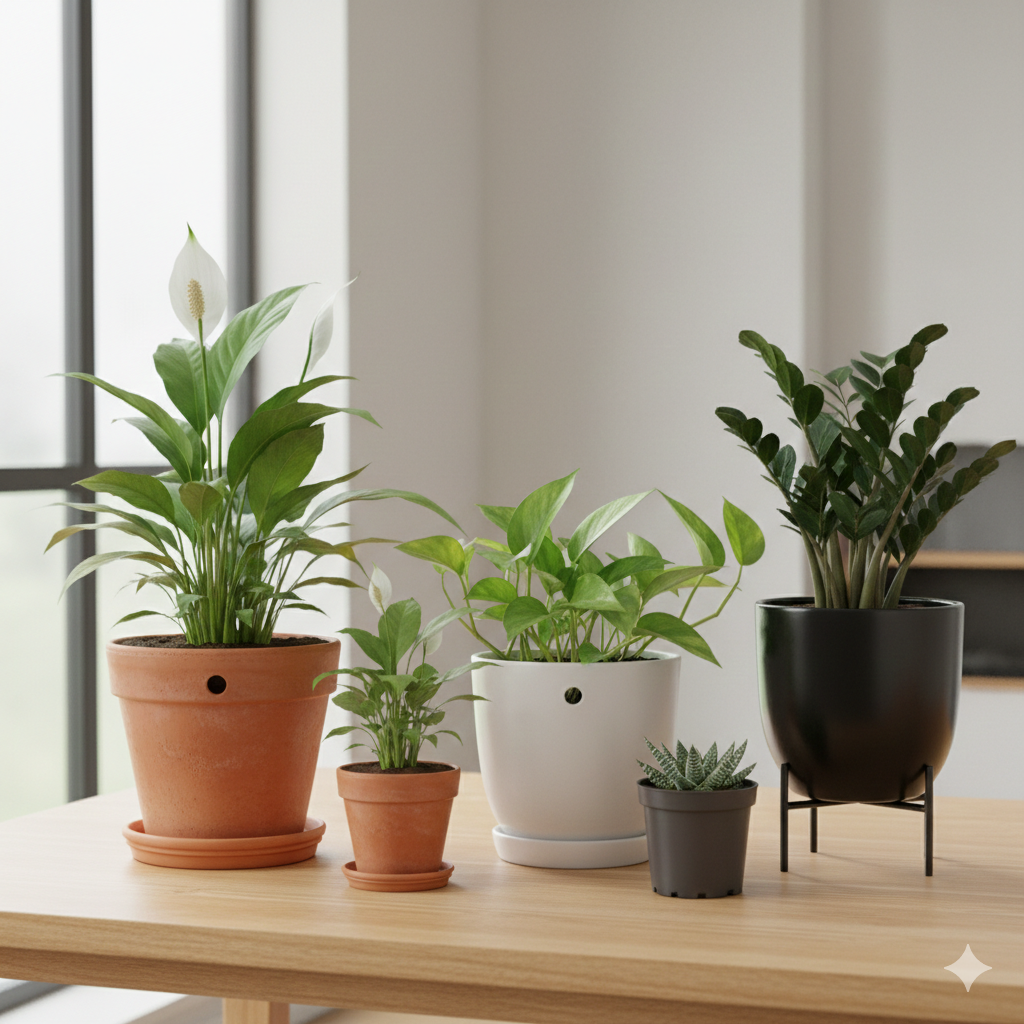
How to Choose the Right Pot for Indoor Plants
Choosing the right pot for indoor plants may seem simple, but it is one of the most important decisions for your plant’s health. The pot you select directly affects water retention, root growth, and overall plant vigor. In this guide, we’ll cover everything you need to know to select the ideal pot for your indoor plants, including size, material, drainage, and design.
Why Choosing the Right Pot Matters
A pot isn’t just a decorative container. It plays a crucial role in plant health:
-
Water management: Some pots retain water, others allow excess to drain.
-
Root space: Plants need enough room to grow; cramped roots stunt growth.
-
Air circulation: Certain materials allow roots to breathe, preventing rot.
-
Aesthetics: A well-chosen pot complements your home décor.
Choosing incorrectly can lead to overwatering, root rot, nutrient deficiencies, and slow growth. Understanding pot features and plant needs is essential for indoor gardening success.
1. Consider Pot Size
The size of your pot affects root development and overall plant health.
Key Points:
-
Small pots: Restrict root growth, which can stunt the plant.
-
Large pots: Retain more water, which may cause root rot if the plant doesn’t need it.
-
Guideline: Choose a pot 1–2 inches larger in diameter than the plant’s current root ball.
Example:
For a 6-inch potted plant, a new pot of 7–8 inches in diameter provides enough room for growth without excessive soil.
Tip: Avoid oversized pots for young plants; it increases the risk of waterlogging.
2. Drainage is Critical
Water drainage is the most crucial factor in pot selection.
Why It Matters:
-
Prevents root rot caused by standing water.
-
Maintains proper soil aeration.
-
Helps nutrient absorption by the roots.
Solutions:
-
Drainage holes: Always choose pots with holes at the bottom.
-
Layering: Use gravel or small stones at the bottom for extra drainage.
-
Saucers: Place a saucer under the pot to catch excess water without causing root rot.
Tip: Some decorative pots without drainage can be used as a cover for a proper drainage pot inside.
3. Material Matters
The pot’s material affects water retention, temperature, and plant growth.
Common Pot Materials:
-
Terracotta
-
Porous and breathable, allowing air to reach roots.
-
Dries faster, reducing the risk of overwatering.
-
Best for succulents, cacti, and plants that prefer drier soil.
-
-
Ceramic
-
Glazed and non-porous; retains moisture longer.
-
Ideal for tropical plants that need consistent moisture.
-
-
Plastic
-
Lightweight and inexpensive.
-
Retains moisture well, suitable for plants needing frequent watering.
-
Easy to move for repositioning in your home.
-
-
Metal
-
Can heat up in sunlight, affecting roots.
-
Often used for decorative purposes rather than plant health.
-
-
Wood or Fabric
-
Provide moderate airflow and drainage.
-
Can rot over time if soil remains wet.
-
Tip: Match material to plant type. Succulents thrive in terracotta, while ferns prefer ceramic or plastic.
4. Shape and Depth
Pot shape influences root direction, stability, and water distribution.
Considerations:
-
Deep pots: Ideal for plants with long taproots like herbs and some indoor trees.
-
Shallow pots: Suitable for plants with shallow roots, like succulents or bonsai.
-
Wide pots: Promote bushy growth for plants that spread horizontally.
Tip: Avoid very tall pots for top-heavy plants; a low, wide pot offers better stability.
5. Indoor Plant Type
Different plants have different root and moisture requirements.
Guidelines:
-
Succulents & Cacti: Prefer terracotta, shallow pots with excellent drainage.
-
Tropical Plants (Fiddle Leaf, Monstera, Philodendron): Prefer ceramic or plastic with moisture retention.
-
Herbs & Small Houseplants: Plastic or ceramic; moderate depth is sufficient.
-
Large Foliage Plants (Rubber Tree, Areca Palm): Large, heavy pots to support top growth.
Tip: Always research the specific requirements of your plant before selecting a pot.
6. Color and Aesthetics
While functionality is key, aesthetics enhance your indoor garden:
-
Light-colored pots: Reflect sunlight, preventing soil overheating.
-
Dark-colored pots: Retain warmth; good for cool environments.
-
Patterns and textures: Add visual appeal but ensure they don’t interfere with drainage.
Tip: Match pot style with room décor for a cohesive indoor look.
7. Self-Watering Pots
Self-watering pots are increasingly popular for indoor plants.
Advantages:
-
Reduces risk of overwatering.
-
Maintains consistent moisture levels.
-
Ideal for busy plant owners or tropical plants.
Considerations:
-
Avoid for succulents or cacti—they prefer soil to dry completely.
-
Check reservoir size; too large may cause waterlogging.
Tip: Use self-watering pots for ferns, peace lilies, and other moisture-loving plants.
8. Weight and Mobility
Pot weight affects your ability to move plants and their stability:
-
Lightweight pots: Easy to move but may tip over for tall plants.
-
Heavy pots: Provide stability but are hard to relocate.
Tip: For large indoor trees, a heavy ceramic or terracotta pot prevents tipping. Small plants can use plastic for mobility.
9. Layering and Soil Considerations
How you fill the pot matters as much as the pot itself.
Guidelines:
-
Use well-draining soil appropriate for your plant type.
-
Add a layer of small stones or gravel at the bottom to prevent water stagnation.
-
Avoid overfilling; leave 1–2 inches at the top for watering.
Tip: Regularly check the soil to ensure it is neither too wet nor too dry.
10. Common Mistakes to Avoid
-
Using pots without drainage
-
Leads to root rot and fungal growth.
-
-
Choosing oversized pots
-
Soil retains too much water, causing root stress.
-
-
Ignoring plant type requirements
-
Succulents in plastic pots may rot; tropical plants in shallow terracotta may dry out.
-
-
Overlooking mobility needs
-
Large plants in light pots may tip over; small plants in heavy pots are hard to move.
-
Tip: Always balance aesthetics with practical plant care.
Expert Tips for Long-Lasting Indoor Plants
-
Rotate plants: Ensure even growth and sunlight exposure.
-
Clean pots: Remove dust and soil buildup regularly to prevent pests.
-
Repot when necessary: Every 1–2 years, or when roots outgrow the pot.
-
Monitor drainage: Adjust watering based on pot material and size.
Tip: Healthy roots equal healthy leaves. A good pot supports both.
Conclusion
Choosing the right pot for indoor plants is more than picking a decorative container. The right pot ensures proper drainage, root growth, and plant stability, while complementing your home décor. Consider pot size, material, drainage, plant type, and mobility when making your selection.
For succulents, shallow terracotta works best. Tropical plants thrive in ceramic or plastic with consistent moisture. Large indoor trees need heavy, stable pots. Always avoid oversized pots and ensure drainage to prevent root rot.
By following these guidelines, you’ll enjoy thriving, healthy indoor plants that look great and grow strong. A well-chosen pot makes a visible difference in plant health and longevity