
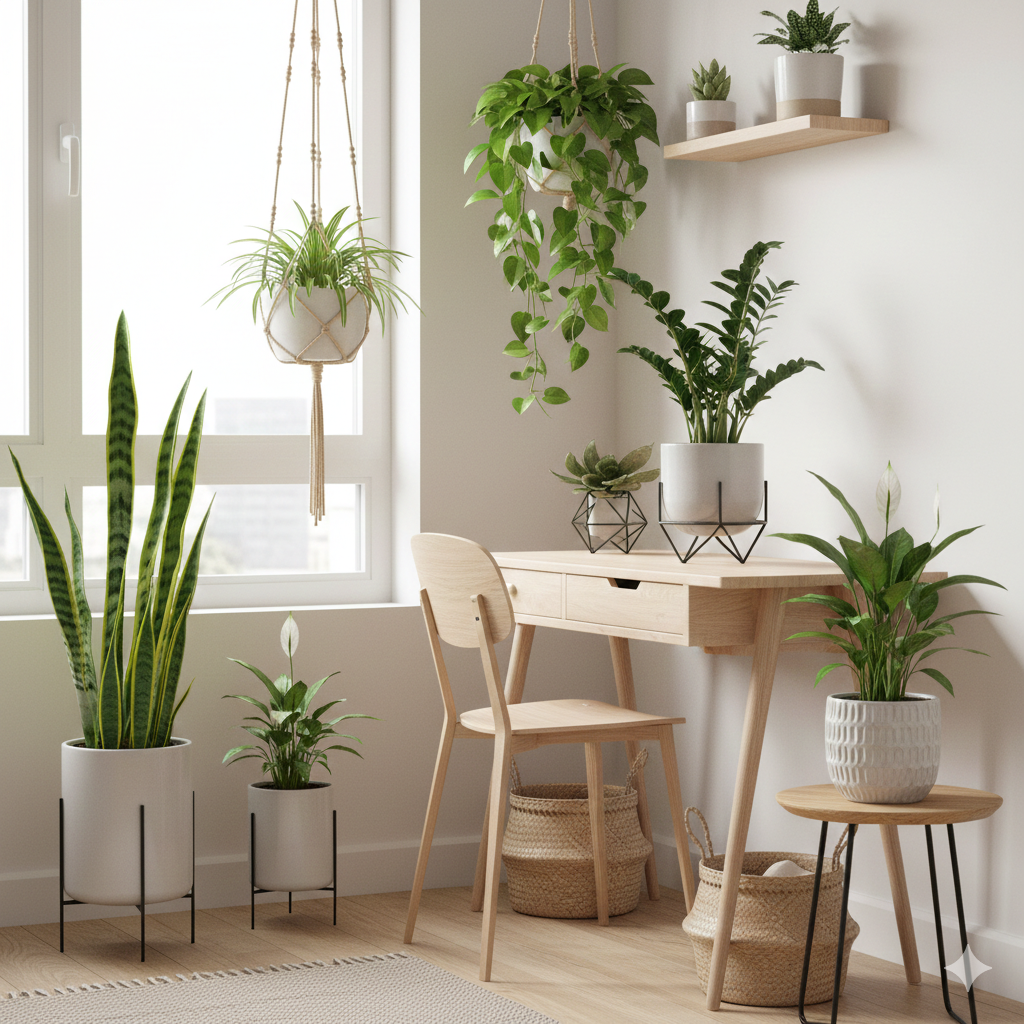
Best Indoor Plants for Small Apartments
Living in a small apartment doesn’t mean you have to sacrifice greenery. Indoor plants not only enhance the aesthetics of your home but also improve air quality, reduce stress, and make your space feel larger and more welcoming. This guide covers the best indoor plants for small apartments, practical placement ideas, care tips, and creative ways to maximize your limited space.
Why Indoor Plants Are Essential in Small Apartments
Small apartments can sometimes feel cramped or lack personality. Adding plants solves multiple problems:
-
Improves air quality: Plants absorb toxins and release oxygen.
-
Boosts mood and reduces stress: Being around greenery has scientifically proven psychological benefits.
-
Enhances aesthetics: Well-chosen plants can act as natural décor elements, adding texture, color, and life.
-
Creates a sense of spaciousness: Vertical plants and hanging greenery can make a small space feel open and dynamic.
Plants are not just decoration—they actively improve the livability of a compact apartment.
Criteria for Choosing the Right Apartment Plants
When selecting plants for small apartments, consider these factors:
-
Size and growth habit: Opt for plants that remain small or grow vertically rather than sprawling.
-
Light requirements: Check how much natural light your apartment receives—low-light plants for dim rooms, bright-light plants for sun-filled spaces.
-
Maintenance level: Choose hardy, low-maintenance plants if your schedule is busy.
-
Aesthetic compatibility: Pick plants and planters that match your apartment’s style and color scheme.
By considering these factors, you ensure your indoor greenery thrives and enhances your space instead of overcrowding it.
Top Indoor Plants for Small Apartments
1. Snake Plant (Sansevieria)
-
Light: Low to bright indirect light.
-
Water: Once every 2–3 weeks.
-
Why it’s great: Vertical leaves take up minimal floor space, air-purifying properties, almost indestructible.
-
Placement ideas: Corners, next to desks, or in narrow entryways.
2. Pothos (Devil’s Ivy)
-
Light: Low to medium indirect light.
-
Water: Weekly, allow soil to dry between watering.
-
Why it’s great: Trailing vines can cascade from shelves, hangers, or wall-mounted pots.
-
Creative tip: Train vines along a trellis or curtain rod for a living wall effect.
3. ZZ Plant (Zamioculcas zamiifolia)
-
Light: Low to moderate indirect light.
-
Water: Every 2–3 weeks; tolerates neglect.
-
Why it’s great: Glossy leaves add elegance; survives in dim corners.
-
Placement ideas: Near bookcases, entryways, or office desks.
4. Spider Plant (Chlorophytum comosum)
-
Light: Bright, indirect light.
-
Water: Weekly; does well in moderate humidity.
-
Why it’s great: Produces baby plants that can be propagated; adds texture.
-
Creative tip: Hang in macrame planters for boho style.
5. Peace Lily (Spathiphyllum)
-
Light: Moderate to low indirect light.
-
Water: Keep soil slightly moist.
-
Why it’s great: Elegant blooms, air-purifying, thrives in shaded areas.
-
Placement ideas: Living room corners, bedside tables, or office desks.
6. Succulents and Cacti
-
Light: Bright, indirect light.
-
Water: Every 2–3 weeks; minimal watering needed.
-
Why it’s great: Compact, low-maintenance, perfect for desks and windowsills.
-
Creative tip: Group small succulents in trays for visual impact.
7. Philodendron
-
Light: Low to bright indirect light.
-
Water: When the top inch of soil dries out.
-
Why it’s great: Heart-shaped leaves, climbing habit, easy to care for.
-
Placement ideas: On shelves, plant stands, or trained to climb supports.
8. Dracaena
-
Light: Low to moderate indirect light.
-
Water: Weekly; avoid overwatering.
-
Why it’s great: Tall and narrow, perfect for small corners or next to furniture.
-
Creative tip: Use tall planters to highlight vertical growth.
9. Fiddle Leaf Fig (Ficus lyrata)
-
Light: Bright, indirect light.
-
Water: Weekly; allow soil to dry slightly between watering.
-
Why it’s great: Large, dramatic leaves make a bold statement in compact spaces.
-
Placement ideas: Near windows or open corners for a living sculpture effect.
10. Air Plants (Tillandsia)
-
Light: Bright, indirect light.
-
Water: Mist 2–3 times per week or soak weekly.
-
Why it’s great: No soil needed; can be displayed creatively in terrariums, glass holders, or hanging structures.
-
Creative tip: Attach to driftwood, shells, or geometric holders for modern décor.
Creative Placement Ideas for Small Apartments
Maximizing greenery in limited spaces requires thoughtful placement:
1. Floating Shelves
-
Mount small plants on wall shelves.
-
Combine trailing plants like pothos with upright plants for layers.
-
Saves floor space and creates a visual feature wall.
2. Hanging Planters
-
Macrame, glass, or metal hangers keep plants off tables and counters.
-
Perfect for trailing plants or small succulents.
-
Can hang near windows to maximize light.
3. Window Sills
-
Ideal for succulents, cacti, and herbs.
-
Tiered plant stands can hold multiple plants in a small footprint.
-
Natural sunlight keeps plants healthy and vibrant.
4. Multi-Level Plant Stands
-
Stack plants vertically using tiered stands.
-
Place tall plants at the bottom and small pots on top.
-
Efficiently uses vertical space while adding visual depth.
5. Corner Displays
-
Dedicate corners to tall planters or stacked shelves.
-
Combine trailing and upright plants for texture and dimension.
-
Corners become focal points without cluttering walking space.
6. Terrariums
-
Glass containers house succulents, air plants, or moss.
-
Works for desktops, coffee tables, or kitchen counters.
-
Adds greenery without overwhelming small spaces.
7. Wall-Mounted Planters
-
Vertical planting keeps floor space free.
-
Mix plants with colorful pots for an accent wall effect.
-
Great for kitchens, bathrooms, or living areas.
Light Considerations for Apartment Plants
Lighting is critical for healthy plant growth:
-
Low-light apartments: Snake plant, ZZ plant, pothos, philodendron.
-
Moderate light: Peace lily, spider plant, dracaena.
-
Bright, indirect light: Succulents, cacti, fiddle leaf fig.
Monitor your plants for signs of stress: yellowing leaves indicate too much water or low light; drooping leaves may mean under-watering.
Low-Maintenance Plants for Busy Residents
For people with limited time, these plants thrive with minimal care:
-
ZZ plant: Survives low light and irregular watering.
-
Snake plant: Almost indestructible, purifies air.
-
Pothos: Grows in any corner with minimal effort.
-
Succulents and cacti: Require infrequent watering.
-
Spider plant: Hardy and produces baby plants for propagation.
These plants remain vibrant and healthy even for busy city dwellers.
Combining Plants with Apartment Interior Decor
Integrating plants with your interior design enhances style and functionality:
-
Use neutral pots for a minimalist aesthetic.
-
Brightly colored planters can enhance eclectic or boho styles.
-
Combine tall floor plants with small tabletop plants for depth.
-
Mix textures: leafy plants, succulents, and trailing vines create a balanced visual effect.
-
Add decorative elements like fairy lights or driftwood to complement greenery.
Plants should feel like part of your apartment, not just accessories.
Seasonal & Themed Plant Ideas
Minimalist Green Corners
-
One or two statement plants.
-
Neutral-colored planters to match décor.
-
Keep surrounding area uncluttered.
Boho Plant Style
-
Use hanging macrame planters and woven baskets.
-
Mix trailing, upright, and textured plants.
-
Add natural materials like driftwood and pebbles.
Modern Geometric Displays
-
Geometric planters or terrariums.
-
Metallic or sleek pots.
-
Symmetrical arrangements create a contemporary feel.
Seasonal Rotations
-
Rotate plants according to seasons: flowering in spring, evergreen in winter.
-
Use seasonal décor elements in pots: pebbles, colored sand, or themed ornaments.
-
Keeps apartment décor dynamic and fresh.
Common Mistakes to Avoid
-
Overcrowding: Too many plants make small spaces feel cluttered.
-
Wrong light placement: Ensure plants match the available sunlight.
-
Ignoring scale: Keep pots and plants proportional to furniture and room size.
-
Neglecting maintenance: Dead leaves and overgrowth make displays look untidy.
-
Inconsistent watering: Learn each plant’s watering needs to avoid root rot or dehydration.
Following these tips ensures plants thrive and enhance your space instead of creating stress.
Benefits of Indoor Plants in Apartments
Even small spaces gain multiple benefits from plants:
-
Purified air: Removes harmful toxins like formaldehyde, benzene, and xylene.
-
Stress relief: Greenery reduces anxiety and improves overall mood.
-
Productivity boost: Ideal for small home offices or study areas.
-
Visual appeal: Adds texture, color, and life to the apartment.
-
Connection to nature: Urban dwellers can enjoy a natural touch indoors.
With the right plant choices, even tiny apartments can feel refreshing and spacious.
Conclusion
Choosing the best indoor plants for small apartments requires balancing size, care, light requirements, and aesthetic appeal. Snake plants, ZZ plants, pothos, succulents, and air plants thrive in limited spaces while enhancing air quality and style. Creative placement using shelves, hanging planters, and vertical arrangements maximizes space efficiently.
Small apartments can transform into vibrant, healthy, and stylish living areas with the right plant selection and thoughtful placement. With minimal care and smart planning, greenery becomes an essential part of your apartment, making it feel larger, fresher, and more inviting.