
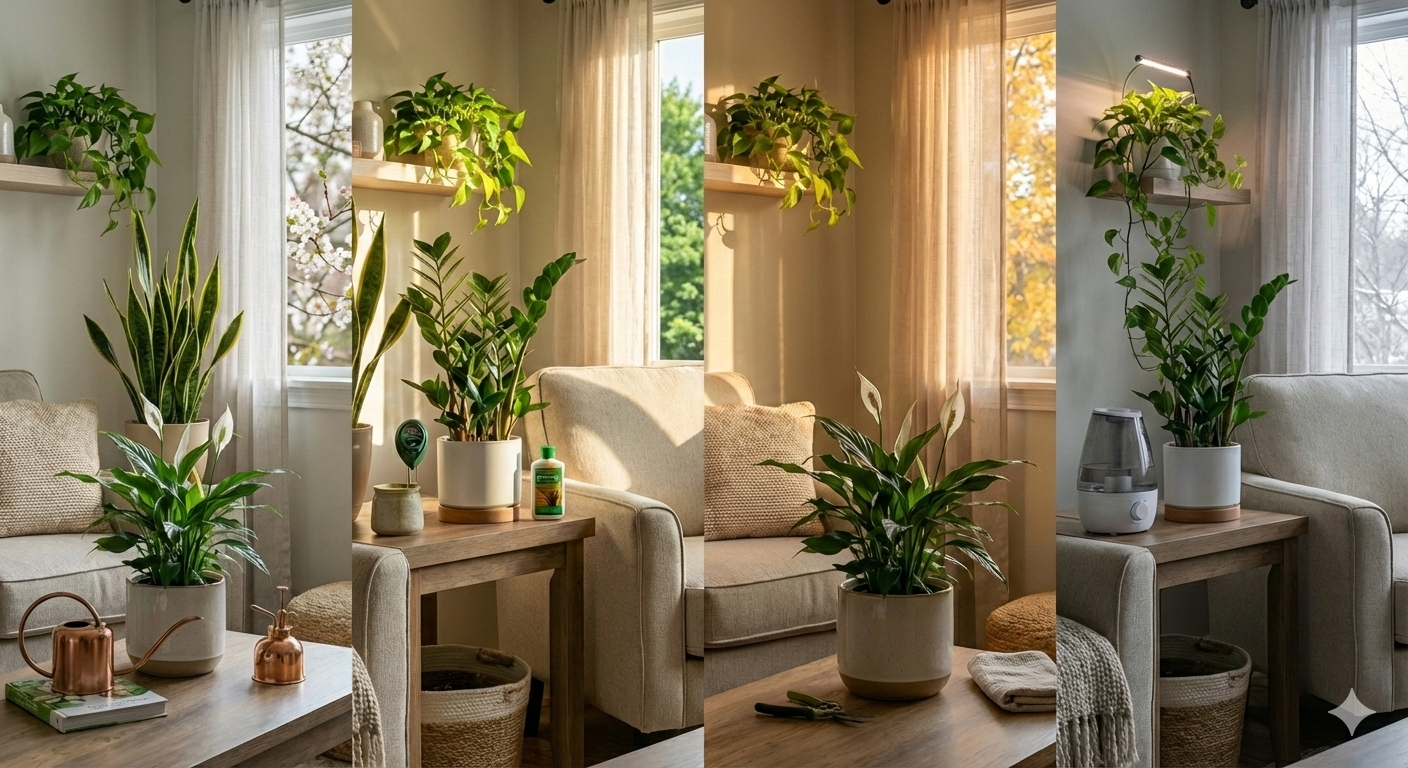
How to Care for Indoor Plants Year-Round
Indoor plants transform any space into a lively, refreshing environment. They purify the air, reduce stress, and bring life to rooms, offices, and corners that might otherwise feel empty. But many plant owners struggle to keep their plants healthy throughout the year. The key is understanding year-round care—adjusting water, light, temperature, and nutrients for each season.
In this guide, we will explore all aspects of caring for indoor plants, including seasonal tips, daily routines, common problems, propagation, and advanced techniques that even beginners can follow.
Why Year-Round Plant Care Is Essential
Plants are living organisms that respond to environmental changes. Even indoor plants experience seasonal shifts because of changes in:
-
Sunlight exposure
-
Indoor temperature
-
Humidity levels
-
Watering needs
Neglecting these changes can lead to slow growth, yellow leaves, or even plant death. Consistent care ensures that your plants remain vibrant, resilient, and long-lasting.
Core Elements of Indoor Plant Health
Before we go into seasonal care, it’s important to understand the four pillars that affect your indoor plants every day:
1. Light
-
Determine the natural light levels in your home: bright, medium, or low.
-
Rotate plants every few weeks for even growth.
-
Use artificial grow lights during darker months to maintain growth.
2. Water
-
Check soil moisture before watering; overwatering is the most common mistake.
-
Adjust watering based on season and plant type.
-
Use pots with drainage holes to prevent root rot.
3. Temperature & Humidity
-
Most indoor plants thrive between 65–75°F (18–24°C).
-
Tropical plants prefer humidity above 50%.
-
Keep plants away from heaters, air conditioners, and cold drafts.
4. Fertilization
-
Fertilize during active growth seasons: spring and summer.
-
Reduce or stop fertilization in fall and winter.
-
Use balanced fertilizers for leafy plants and higher phosphorus fertilizers for flowering plants.
Seasonal Indoor Plant Care
Winter Care
Winter is challenging due to low light and dry air. To protect your plants:
-
Light: Move plants closer to windows. Rotate for even exposure.
-
Watering: Water less frequently; check soil before watering.
-
Humidity: Use a humidifier or pebble trays to maintain moisture.
-
Cleaning: Dust leaves for better photosynthesis.
Spring Care
Spring is growth season. Plants emerge from dormancy and need support:
-
Repotting: If roots are crowded, move to slightly larger pots.
-
Fertilization: Begin light feeding with balanced fertilizers.
-
Pruning: Remove dead or yellow leaves.
-
Pest Control: Inspect for aphids, spider mites, and other pests.
Summer Care
Summer accelerates plant growth, but heat and sunlight require adjustments:
-
Watering: Increase frequency but avoid waterlogging.
-
Light: Protect from harsh sunlight using sheer curtains.
-
Fertilization: Feed every 4–6 weeks.
-
Pest Prevention: Check regularly for pests and remove affected leaves.
Fall Care
Fall is a transition period. Growth slows and plants prepare for winter:
-
Watering: Reduce watering.
-
Fertilization: Gradually stop fertilizing.
-
Pruning: Remove old leaves and stems.
-
Preparation: Inspect and treat for pests before winter.
Daily and Weekly Plant Care Routine
Consistent care ensures year-round plant health.
Daily Checks:
-
Look for drooping or yellowing leaves.
-
Remove fallen leaves from soil.
-
Observe changes in growth or coloration.
Weekly Tasks:
-
Dust leaves to maximize light absorption.
-
Rotate plants for even growth.
-
Inspect for pests or disease.
-
Adjust watering as needed based on soil moisture.
Monthly Tasks:
-
Fertilize during growing seasons.
-
Repot or divide plants if needed.
-
Deep-clean leaves and stems.
Common Indoor Plant Problems
Yellow Leaves
-
Cause: Overwatering or poor drainage
-
Solution: Let soil dry before watering, use pots with drainage holes
Wilting Leaves
-
Cause: Underwatering or root rot
-
Solution: Water if dry, check roots if wet, and repot if necessary
Brown Leaf Tips
-
Cause: Low humidity, over-fertilization, or underwatering
-
Solution: Increase humidity, reduce fertilizer, and water consistently
Pest Infestation
-
Common pests: Aphids, spider mites, fungus gnats
-
Solution: Remove pests manually, wipe leaves with mild soap, isolate infected plants
Slow Growth
-
Cause: Lack of light or nutrients
-
Solution: Move to brighter location, fertilize during growing season
Advanced Care Techniques
Propagation
Propagation allows you to create new plants and expand your indoor garden:
-
Stem cuttings: Pothos, philodendrons, and spider plants root easily in water or soil.
-
Division: Snake plants, ferns, and peace lilies can be separated at the roots.
-
Offsets/pups: Spider plants and bromeliads naturally produce new plants.
Soil Management
-
Use well-draining soil for all indoor plants.
-
Add perlite or sand to improve aeration and drainage.
-
Repot every 1–2 years to prevent soil compaction.
Fertilization Strategies
-
Use slow-release fertilizers for low-maintenance plants.
-
Liquid fertilizers work best for active growth seasons.
-
Avoid fertilizing dormant plants to prevent root burn.
Humidity Management
-
Group plants together to increase local humidity.
-
Use pebble trays or mist leaves for tropical plants.
-
Consider a small indoor humidifier during dry months.
Year-Round Plant Layout Tips
-
Grouping: Place plants with similar light and water requirements together.
-
Trailers and climbers: Use shelves, hanging baskets, and trellises for trailing plants.
-
Small spaces: Use compact plants like ZZ plants or snake plants for desks and shelves.
-
Bathrooms: Ferns and peace lilies thrive in humid spaces.
-
Corners: Large leafy plants like monstera or fiddle leaf figs can fill empty spaces.
Plant-Specific Care Recommendations
Low-Light Tolerant Plants
-
ZZ Plant: Very low maintenance, tolerates minimal light, water every 2–3 weeks.
-
Snake Plant: Hardy, needs little water, grows in low to bright indirect light.
-
Pothos: Thrives in low light, easy to propagate, occasional fertilization.
-
Peace Lily: Prefers low light and humidity, flowers with proper care.
Medium-Light Plants
-
Spider Plant: Adapts to medium light, produces pups for propagation.
-
Philodendron: Easy to grow, prefers indirect light, occasional pruning.
-
Fiddle Leaf Fig: Needs bright indirect light, sensitive to overwatering.
Flowering Indoor Plants
-
Orchids: Require bright indirect light, high humidity, careful watering.
-
Anthurium: Prefers filtered light and regular humidity.
-
Kalanchoe: Succulent flowering plant, needs moderate water and bright light.
Troubleshooting Seasonal Challenges
Winter Challenges
-
Low light → Rotate near windows or use grow lights
-
Dry air → Group plants, use humidifier, or mist leaves
-
Slow growth → Reduce fertilizer and water lightly
Summer Challenges
-
Excessive sunlight → Move plants to filtered light
-
Increased water need → Check soil daily
-
Pest outbreaks → Inspect and clean leaves regularly
Spring Challenges
-
Rapid growth → Fertilize and prune as needed
-
Root-bound plants → Repot to larger containers
-
Pest prevention → Inspect frequently for new infestations
Fall Challenges
-
Slowing growth → Reduce watering and fertilization
-
Preparing for dormancy → Remove dead leaves and stems
-
Pest management → Treat issues before winter sets inenefits of Consistent Indoor Plant Care
-
Air purification: Indoor plants remove toxins like formaldehyde, benzene, and trichloroethylene.
-
Stress relief: Studies show plants reduce stress and improve mood.
-
Aesthetic appeal: Plants elevate the visual environment and make spaces feel inviting.
-
Productivity boost: Indoor greenery improves focus, creativity, and work efficiency.
-
Long-term health: Proper care ensures plants thrive for years, increasing value and enjoyment.
Year-Round Indoor Plant Checklist
| Task | Frequency | Notes |
|---|---|---|
| Watering | Weekly or biweekly | Adjust based on season and plant type |
| Fertilization | Every 4–6 weeks | Only during active growth season |
| Leaf cleaning | Weekly | Wipe dust off leaves |
| Rotation | Monthly | Promote even growth |
| Pest inspection | Weekly | Catch problems early |
| Repotting | Every 1–2 years | Refresh soil and provide space |
| Pruning | Seasonal | Remove dead or yellow leaves |
Conclusion
Caring for indoor plants year-round is achievable with understanding light, water, temperature, and nutrients. Adjusting care based on seasonal changes, monitoring for pests, and using propagation, pruning, and soil management techniques ensures healthy, thriving plants throughout the year.
By following this guide, you can enjoy a vibrant, indoor garden that purifies your air, boosts your mood, and enhances your home or office décor. Whether you are a beginner or experienced plant owner, consistent year-round care is the key to success.