
Best Indoor Plants for Beginners: A Complete Guide to Easy-Care Greenery
If you’re new to indoor gardening and wondering which plants are perfect for beginners, you’re in the right place. Indoor plants can brighten your space, improve air quality, and even boost your mood—but choosing the right ones makes all the difference. In this guide, we’ll cover the best indoor plants for beginners, their care needs, common mistakes to avoid, and tips to ensure your greenery thrives.
Why Indoor Plants Are Perfect for Beginners
Indoor plants are ideal for those just starting because they:
-
Require minimal maintenance compared to outdoor gardens.
-
Can grow in low-light environments.
-
Help reduce stress and improve indoor air quality.
-
Add aesthetic value to your home or workspace.
Starting with beginner-friendly plants ensures you enjoy success early, which motivates you to expand your indoor garden over time.
How to Choose Indoor Plants for Beginners
When selecting indoor plants, consider these factors:
-
Light Requirements
Some plants need bright, indirect light, while others can thrive in low-light spaces. Evaluate your room’s natural light before choosing a plant. -
Watering Needs
Overwatering is the number one cause of plant death for beginners. Look for plants that tolerate occasional neglect. -
Growth Rate and Size
Fast-growing plants may need frequent pruning. For small spaces, pick compact varieties that stay manageable. -
Maintenance Level
Beginner plants should survive occasional forgetfulness, pests, or changes in temperature.
Top Indoor Plants for Beginners
Here’s a detailed list of beginner-friendly indoor plants, including care instructions for each:
1. Snake Plant (Sansevieria)
-
Light: Low to bright indirect light.
-
Water: Allow soil to dry completely between waterings.
-
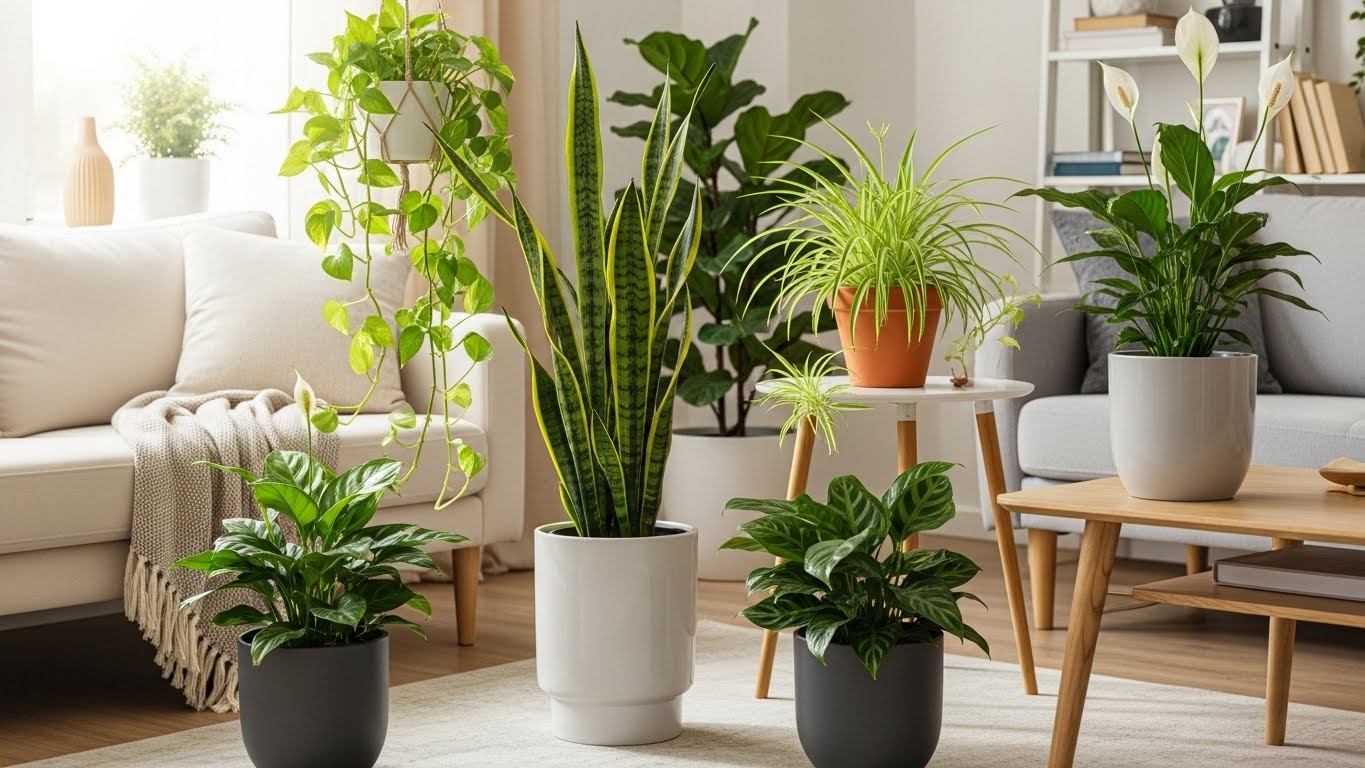
Care Tip: Snake plants are nearly indestructible and remove toxins from the air.
Snake plants are perfect for forgetful gardeners. Their upright leaves add architectural beauty to any room.
2. Pothos (Epipremnum aureum)
-
Light: Low to bright indirect light.
-
Water: Water when the top inch of soil is dry.
-
Care Tip: Pothos can trail or climb, making them versatile for shelves, hanging baskets, or plant stands.
Pothos is forgiving and grows quickly, perfect for beginners who want a lush, green display.
3. ZZ Plant (Zamioculcas zamiifolia)
-
Light: Low to bright indirect light.
-
Water: Water every 2–3 weeks; drought-tolerant.
-
Care Tip: ZZ plants store water in their thick stems, so they can survive long periods without attention.
ZZ plants have glossy leaves and a striking appearance, ideal for minimalistic or modern spaces.
4. Spider Plant (Chlorophytum comosum)
-
Light: Bright, indirect light preferred.
-
Water: Keep soil slightly moist, not soggy.
-
Care Tip: Spider plants produce baby shoots, which can be propagated easily.
Spider plants are resilient and purify the air, making them a classic beginner choice.
5. Peace Lily (Spathiphyllum)
-
Light: Low to moderate indirect light.
-
Water: Keep soil moist; leaves may droop if thirsty.
-
Care Tip: Peace lilies bloom white flowers even indoors and alert you when they need water.
Peace lilies add elegance and are excellent air purifiers, perfect for bedrooms or offices.
6. Philodendron
-
Light: Moderate indirect light.
-
Water: Water when the top 1–2 inches of soil are dry.
-
Care Tip: Philodendrons are fast growers, adaptable, and great for hanging baskets or climbing supports.
They thrive with minimal effort and adapt to a range of indoor conditions.
7. Aloe Vera
-
Light: Bright, indirect sunlight.
-
Water: Water deeply but infrequently; allow soil to dry completely.
-
Care Tip: Aloe is both decorative and functional—the gel inside its leaves has natural healing properties.
Perfect for sunny windowsills, aloe vera is hardy and multi-purpose.
8. Cast Iron Plant (Aspidistra elatior)
-
Light: Low to moderate light.
-
Water: Water when the top inch of soil is dry.
-
Care Tip: True to its name, this plant tolerates neglect, low light, and temperature fluctuations.
Ideal for low-maintenance indoor greenery, cast iron plants are durable and slow-growing.
9. Chinese Evergreen (Aglaonema)
-
Light: Low to bright indirect light.
-
Water: Allow soil to dry between waterings.
-
Care Tip: Aglaonema is perfect for offices or shaded areas and comes in many colorful leaf patterns.
It’s visually striking and extremely resilient, making it a beginner favorite.
10. Dracaena
-
Light: Bright, indirect light.
-
Water: Water moderately; avoid overwatering.
-
Care Tip: Dracaena varieties have architectural leaves and grow well in containers.
Dracaenas are ideal for living rooms and offices, adding height and elegance to indoor spaces.
Common Beginner Mistakes and How to Avoid Them
Even with easy-care plants, beginners can make simple mistakes. Here’s what to watch for:
-
Overwatering
-
Symptoms: Yellowing leaves, root rot.
-
Solution: Always check if soil is dry before watering.
-
-
Insufficient Light
-
Symptoms: Slow growth, pale leaves.
-
Solution: Match your plant to the available light and rotate occasionally.
-
-
Wrong Pot Size
-
Symptoms: Roots can become cramped or soil dries too quickly.
-
Solution: Use pots with drainage holes and an appropriate size for growth.
-
-
Neglecting Fertilizer
-
Symptoms: Stunted growth, dull leaves.
-
Solution: Feed with a balanced houseplant fertilizer monthly during growing season.
-
-
Ignoring Pests
-
Symptoms: Yellow spots, sticky residue, holes in leaves.
-
Solution: Inspect leaves regularly and treat with mild insecticidal soap if needed.
-
Tips for Keeping Indoor Plants Healthy
-
Rotate plants regularly to ensure even growth.
-
Wipe leaves occasionally to remove dust and improve photosynthesis.
-
Prune dead leaves to promote healthy new growth.
-
Use appropriate soil—succulent mix for cacti, peat-based for leafy plants.
-
Monitor humidity—some plants like higher humidity; mist if necessary.
Benefits of Indoor Plants for Beginners
Indoor plants offer more than just visual appeal. Beginners can enjoy:
-
Air purification: Plants like snake plant, peace lily, and spider plant remove toxins.
-
Stress reduction: Studies show indoor greenery lowers stress and improves mental health.
-
Improved focus: Greenery in workspaces enhances concentration and productivity.
-
Aesthetic enhancement: Even a single plant can transform a dull corner into a lively space.
Conclusion
Starting an indoor garden doesn’t need to be intimidating. By choosing beginner-friendly plants like snake plants, pothos, ZZ plants, and peace lilies, you can enjoy the benefits of indoor greenery without feeling overwhelmed. Focus on light, watering, and maintenance needs, and you’ll build a thriving indoor jungle in no time.
Remember, every plant has its rhythm. Observe, adjust, and enjoy watching your indoor space transform. Start small, stay consistent, and your beginner indoor plants will reward you with lush greenery and improved well-being.