
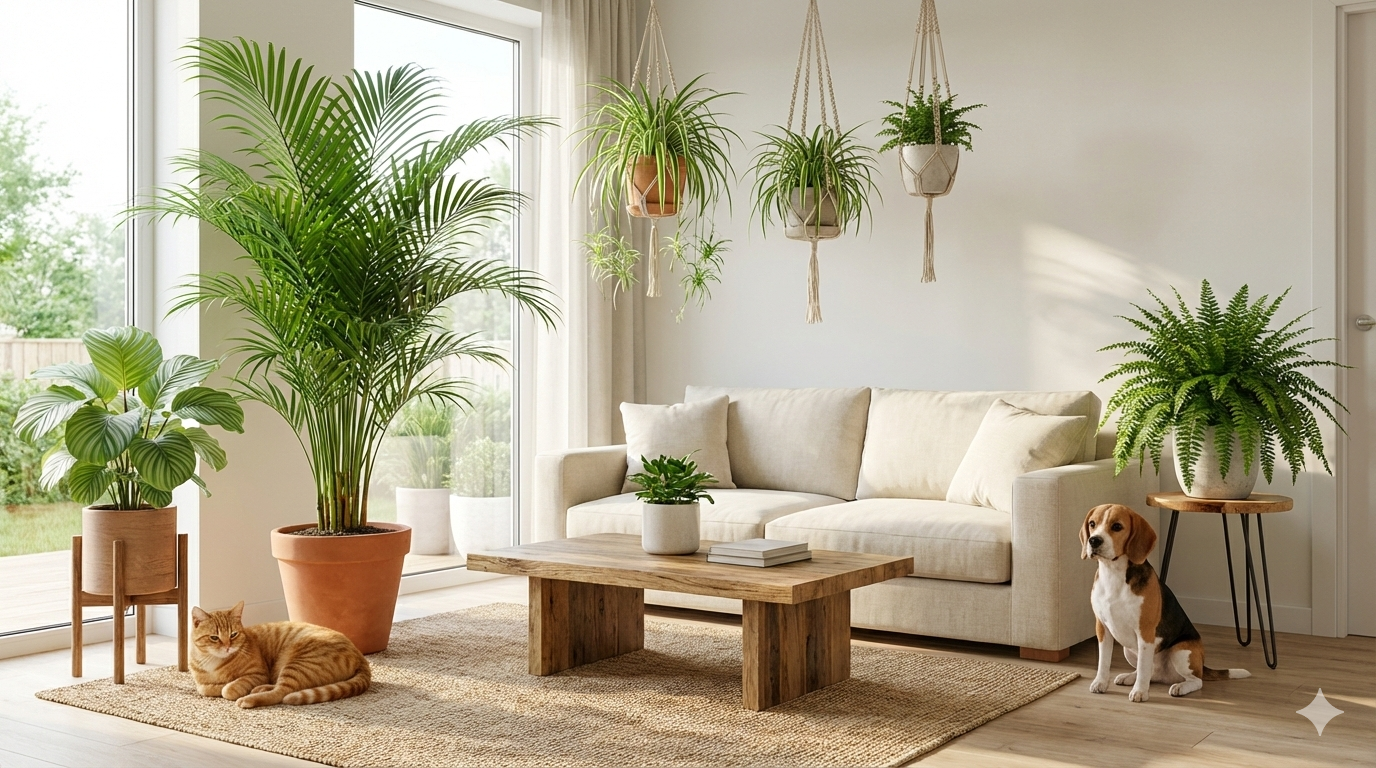
Introduction
Choosing indoor plants becomes more complicated when you share your home with pets. Many popular houseplants are toxic to cats and dogs, which can lead to serious health issues if chewed or ingested. That concern often pushes pet owners to avoid indoor plants entirely.
The good news is that you don’t have to choose between a green home and pet safety. There are many pet-friendly indoor plants that are safe and easy to grow, even for beginners. These plants add beauty, improve indoor air quality, and stay harmless to your furry companions.
In this guide, you’ll find safe plant options, care tips, and clear answers to the most common questions pet owners search for. Everything here is practical, research-backed, and designed for real homes.
Why Choosing Pet-Friendly Indoor Plants Matters
Pets explore the world with their mouths. Cats chew leaves. Dogs dig, sniff, and nibble anything within reach. When a plant is toxic, even a small bite can cause vomiting, drooling, diarrhea, or worse.
Many common houseplants like pothos, philodendron, peace lily, and snake plant are toxic to pets. They’re popular because they’re easy to grow, but they pose real risks.
Pet-friendly indoor plants remove that worry. They allow you to decorate freely without constantly monitoring your pet’s behavior or stressing about emergencies.
What Makes a Plant Pet-Friendly?
A pet-friendly plant is considered non-toxic to cats and dogs when ingested in small to moderate amounts. This classification is commonly based on veterinary research and databases such as the ASPCA Animal Poison Control Center.
Pet-safe does not mean indestructible. Plants can still be damaged by chewing, and excessive ingestion of anything can upset a pet’s stomach. The key difference is that these plants do not contain poisonous compounds.
Best Pet-Friendly Indoor Plants That Are Safe and Easy to Grow
Spider Plant (Chlorophytum comosum)
Spider plants are one of the safest and most beginner-friendly houseplants available. They thrive in indirect light and tolerate occasional neglect.
They produce long arching leaves and small offshoots that look great in hanging baskets. Cats may be attracted to them, but the plant itself is non-toxic.
Care basics:
-
Bright, indirect light
-
Water when the top inch of soil dries
-
Prefers well-draining soil
Areca Palm (Dypsis lutescens)
Areca palms bring a tropical feel to indoor spaces. They are safe for pets and grow well in bright rooms.
This plant works well as a floor plant and helps soften harsh interiors with its feathery leaves.
Care basics:
-
Bright, indirect light
-
Consistent watering without soggy soil
-
Moderate humidity preferred
Boston Fern (Nephrolepis exaltata)
Boston ferns are classic indoor plants known for their lush green fronds. They are safe for both cats and dogs.
They require slightly more attention than some plants but reward you with full, healthy growth.
Care basics:
-
Indirect light
-
Regular watering
-
Higher humidity levels
Calathea (Prayer Plant Family)
Calatheas are loved for their decorative patterned leaves. They are completely non-toxic and safe for pets.
They do best in stable indoor environments and add visual interest without flowers.
Care basics:
-
Low to medium indirect light
-
Even moisture
-
Avoid direct sunlight
Parlor Palm (Chamaedorea elegans)
Parlor palms are compact, slow-growing, and ideal for apartments. They are non-toxic and very forgiving.
They adapt well to indoor conditions and require minimal maintenance.
Care basics:
-
Low to medium light
-
Water when soil feels dry on top
-
Tolerates average indoor humidity
Peperomia
Peperomia plants come in many varieties with thick leaves and compact growth. They are safe for pets and easy to manage.
They work well on desks, shelves, and small spaces.
Care basics:
-
Bright, indirect light
-
Light watering
-
Well-draining soil
Polka Dot Plant (Hypoestes phyllostachya)
This plant adds color with its spotted leaves and remains safe for pets. It’s a good option for decorative accents.
Care basics:
-
Bright indirect light
-
Regular watering
-
Pinch back to maintain shape
African Violet
African violets are flowering indoor plants that are safe for pets and suitable for beginners.
They add color without toxic risk.
Care basics:
-
Bright indirect light
-
Water from the bottom
-
Avoid wetting leaves
Indoor Plants That Are Safe for Cats and Dogs
Many pet owners specifically search for plants that are safe for both cats and dogs. The plants listed above meet that requirement and are widely recognized as non-toxic.
If you’re shopping at a nursery, always verify plant names. Common names can be misleading, and some toxic plants share similar appearances with safe ones.
How to Care for Pet-Friendly Indoor Plants Successfully
Choose the Right Location
Place plants where they receive proper light but aren’t constantly disturbed by pets. Elevated shelves and hanging planters help protect plants while staying accessible for care.
Use Pet-Safe Soil and Fertilizers
Avoid chemical fertilizers and pesticides. Organic compost, worm castings, and diluted liquid fertilizers are safer options.
Prevent Chewing Without Harm
If your pet shows interest in chewing plants:
-
Provide pet-safe grass alternatives
-
Use citrus peels near pots
-
Redirect behavior with toys
Never use chemical deterrents.
Common Questions About Pet-Friendly Indoor Plants
Are all non-toxic plants safe if eaten?
Non-toxic plants are unlikely to cause serious harm, but eating large amounts can still cause mild digestive upset. Monitor your pet’s behavior.
Can hanging plants still be a problem for cats?
Yes. Cats are climbers. Even hanging plants should be pet-safe.
How do I confirm a plant is safe?
Cross-check plant names with trusted veterinary sources such as the ASPCA database or reputable gardening references.
Plants That Are Often Mistaken as Pet-Friendly (But Are Not)
Some plants are commonly believed to be safe but are actually toxic:
-
Snake plant
-
Peace lily
-
Aloe vera
-
Pothos
-
ZZ plant
These should be avoided in homes with pets.
How to Design a Pet-Safe Indoor Plant Setup
Focus on balance. Choose durable plants, use stable pots, and keep fragile plants out of high-traffic pet areas.
Use heavier planters to prevent tipping. Avoid hanging plants with dangling parts that attract chewing.
Benefits of Pet-Friendly Indoor Plants
Pet-safe plants allow you to:
-
Improve indoor air quality
-
Reduce stress
-
Enhance home aesthetics
-
Create a healthier environment
They support both human comfort and pet safety without compromise.
Conclusion
Creating a green home doesn’t mean putting your pets at risk. Pet-friendly indoor plants that are safe and easy to grow give you the best of both worlds. With the right plant choices and basic care, you can enjoy indoor greenery without constant worry.
Start with one or two low-maintenance options. Observe how your pet interacts with them. Over time, you’ll build a safe, beautiful indoor space that works for everyone in your home.
If you choose wisely and care consistently, pet-safe indoor plants can thrive for years while keeping your pets healthy and your home vibrant.